Summer Dog Safety · July 2026
Keep Your Dog Cool: Hot Pavement & Summer Travel Safety
How to tell when pavement is too hot for your dog's paws, what actually protects them, and how to keep everyone hydrated on walks and road trips this summer.
Updated: July 30, 2026 Summer Dog Safety 7 min read

Quick answer: Press the back of your hand flat against the pavement and hold it there for 10 seconds — if it's too hot for you to keep it there comfortably, it's too hot for your dog's paws. On a sunny day, asphalt runs far hotter than the air above it, so "it doesn't feel that hot out" isn't a reliable test on its own. Walk during cooler hours, choose grass or shaded routes when you can, and keep dog boots or a protective paw balm on hand for days when pavement is unavoidable.
Key takeaways
✓Asphalt can be dramatically hotter than the air above it — at 86°F air temperature, pavement can reach around 135°F, according to the American Kennel Club.
✓The AKC's 10-second hand test is a fast, reliable way to check the ground before every summer walk, not just on days that feel obviously hot.
✓Dog boots give the most complete barrier for pavement walks; a paw balm applied beforehand adds a lighter layer of protection and conditions pads between uses.
✓Dogs don't always show pain right away when their pads are burned, so testing the ground yourself matters more than watching for limping.
✓Portable water for drinking (and rinsing paws) matters as much as timing — heat and dehydration compound each other fast on a walk or road trip.
✓Early morning or evening walks, plus grass or shaded routes, cut the risk before it starts.
Summer is when most of the store's outdoor-gear questions come in — not because dogs mind the heat any less than usual, but because pavement gets dangerously hot well before the air does. A walk that feels perfectly pleasant to you can already be too hot for your dog's paws by the time you're a block from home. Here's how to check, what actually helps, and what to pack for a hot-weather walk or road trip.
How Hot Is Too Hot? The Pavement Test
Air temperature is a poor guide to how hot the ground actually is. Dark, sun-exposed surfaces like asphalt absorb and hold heat, so the gap between air and pavement temperature grows fast on a sunny day. According to the American Kennel Club, when the air temperature is 86°F, asphalt can reach around 135°F — hot enough to damage skin in under a minute.
💡 The 10-second rule
Before a summer walk, press the back of your hand flat against the pavement and hold it there for 10 seconds. If it's too hot for you to keep your hand there comfortably, it's too hot for your dog's paws too — reroute to grass, shade, or wait for a cooler part of the day.
Test at the actual time you plan to walk, not earlier in the day — pavement keeps absorbing heat through the afternoon and can stay hot well into the evening even after the air starts to cool. For the fuller picture on warm-weather risks beyond paws, the American Veterinary Medical Association's warm weather pet safety guidance is a good general reference.
Protecting Your Dog's Paws
When pavement fails the hand test and a grass or shaded route isn't an option, paw protection turns a risky walk into a safe one. Three real options each handle a different part of the problem:
👢
Dog boots — the most complete barrier
A waterproof, anti-slip sole physically blocks heat transfer from the ground, the same way it blocks ice, salt, and rough terrain in winter. Best for daily pavement walks, hikes, or dogs with sensitive pads.
🧴
Paw balm — a lighter, preventive layer
Applied before a walk, a wax-based balm adds a protective layer and keeps pads conditioned between uses. A reasonable option for shorter walks on warm (not scorching) surfaces.
🧽
Paw cleaner/foam — for after the walk
Cleans dirt and residue from pads and between toes, and gives you a chance to actually look at the pads for redness, cracking, or blistering while you clean.

Most protection
Waterproof Shoes/Boots for Medium & Large Dogs
$47.99
Rugged anti-slip soles with reflective Velcro straps for a secure fit — built to protect paws from hot pavement, ice, salt, and rough trail terrain, with reflective straps for visibility on evening walks. Available in Black, Red, Orange, and Green.
Shop Dog Boots — $47.99 →

Preventive layer
Petnatics PawBalm ReducedSlip
$8.95
A 100% natural, non-greasy balm that forms a protective barrier on paw pads and helps heal dry or cracked pads between walks. Fast-absorbing with no slippery residue.
Shop PawBalm — $8.95 →

After the walk
Petnatics The Original PawFoam™
$9.95
A rinse-free foaming cleanser with a built-in silicone brush that cleans dirt and grime from paws and nails while moisturizing with coconut oil, wheat extract, and glycerin.
Shop PawFoam — $9.95 →
Staying Hydrated on the Go
Heat and dehydration compound each other fast — a dog that's already warm from hot pavement needs water more urgently than usual, and panting alone doesn't replace fluids the way drinking does. A portable water bottle with a built-in bowl means water is available the moment your dog needs it, whether that's a neighborhood walk, a hike, or a stop on a road trip.

On-the-go hydration
Rubyloo Dog Water Bottle with Detachable Bowl
From $32.95
A 32 oz food-grade stainless steel bottle with double-wall copper insulation and an 8 oz detachable bowl — leak-proof chug lid, hinged carry handle, built for hikes, road trips, and daily walks.
Shop Rubyloo Water Bottle — From $32.95 →
For shorter walks or a lighter bag, the Dog Travel Water Bottle with Collapsible Bowls pairs a smaller water and food compartment with two collapsible bowls — a practical, lower-cost option for quick outings, starting at $12.99.
Best Times and Routes for Summer Walks
Timing and route do most of the work before protective gear even comes into play. Early morning and evening walks avoid the hours when pavement has had the most time to absorb heat, and grass, dirt, or shaded paths stay noticeably cooler than asphalt, concrete, or sand — sand in particular can run even hotter than pavement in direct sun.
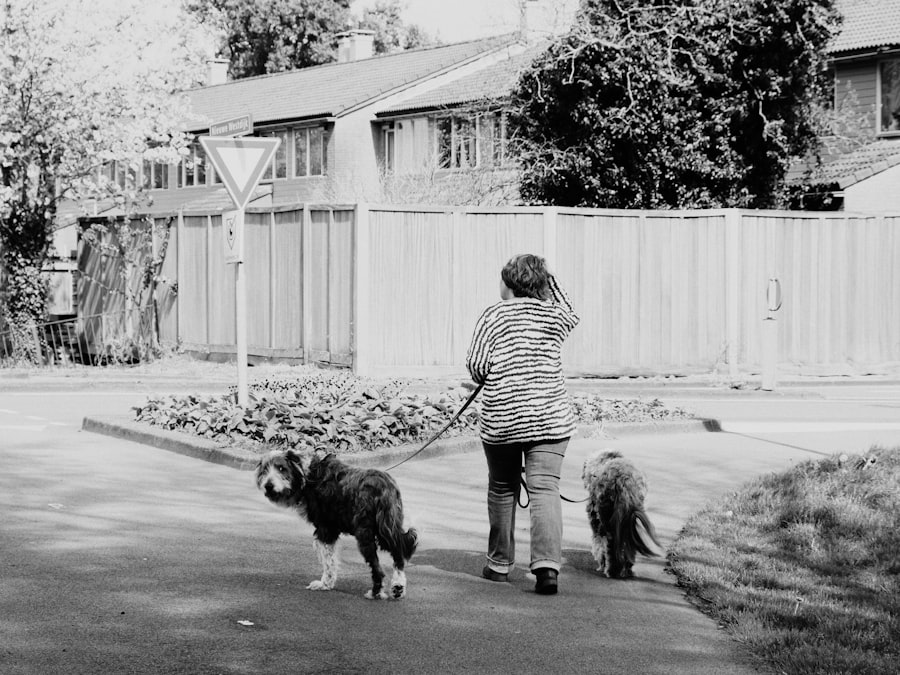 Grass and shaded routes stay noticeably cooler underfoot than asphalt or concrete on a sunny day.
Watch your dog during the walk, too — reluctance to keep walking, lifting a paw, whining, or excessive panting can all be signs of heat discomfort. If you see any of these, get off the hot surface immediately, move to shade, offer water, and check the pads. For the broader list of heat-stress warning signs beyond paw discomfort, see the AVMA guidance linked in the section above.
Myths vs. Facts About Summer Paw Safety
MythMy dog's paw pads are tough, so hot pavement can't really hurt them.
FactPaw pads are skin — they can burn and blister on hot asphalt just like unprotected human skin can, which is exactly why the American Kennel Club recommends the hand test.
MythIf my dog isn't limping, the ground must be fine.
FactDogs don't always show pain right away, and damage can already be underway by the time limping shows up — testing the ground yourself catches the problem before it happens, not after.
MythDog boots are only useful for winter snow and ice.
FactBoots block heat transfer from hot pavement just as effectively as they block cold from snow and ice — the barrier works both directions.
Frequently Asked Questions
How long can a dog safely walk on hot pavement?
There's no single safe number — it depends on breed, coat, paw sensitivity, and exactly how hot the surface is. Rather than guessing at a time limit, use the 10-second hand test before you go, and default to grass or shade whenever pavement fails it.
Do all dogs need dog boots in summer?
Not every dog — but they're especially worth it for dogs on daily pavement walks, dogs recovering from a paw injury, or breeds with more sensitive pads. For lighter needs, a paw balm plus smarter route timing can be enough.
What are signs my dog's paw pads might already be burned?
Limping, refusing to walk, licking or chewing at the paws, or visible blistering, redness, or darkened pads are all signs. Get off the hot surface immediately, and check in with your vet if you see any of these.
Can I use paw balm instead of boots?
For a quick trip across warm — not scorching — pavement, balm adds a real layer of protection and keeps pads conditioned. For any surface that fails the hand test, boots are the safer choice.
What other heat safety signs should I watch for on a summer walk?
Heavy panting, drooling, lethargy, or stumbling can signal heat stress beyond just paw discomfort. The AVMA's warm weather pet safety guidance, linked above, covers the fuller list and what to do if you see it.
Final Recommendations
Summer paw safety comes down to a handful of habits more than any single product. Here's what actually moves the needle:
1
Test the pavement with the 10-second hand rule before every summer walk, not just on days that feel obviously hot.
2
Keep a pair of dog boots on hand for pavement-heavy walks, road trips, or hikes where a grass route isn't realistic.
3
Apply a paw balm before walks as a lighter, everyday layer of protection and conditioning.
4
Clean and check paws with a paw foam after outdoor time, especially after a hot-pavement walk.
5
Carry a portable water bottle with a built-in bowl on every walk, hike, or car ride.
6
Default to early morning or evening walks and grass or shaded routes whenever you can.
Gear Up for Summer Walks
Dog boots, paw balm, paw foam, and travel water bottles are all in stock now at Whisker House. New visitors get 7% off automatically at checkout.
Shop Whisker House →
WH
Whisker House
Whisker House is a curated pet supply store built by dog owners who read the ingredient panel before recommending anything. Every product is chosen because it solves a real problem for real pets — not because it looks good on a shelf. Backed by 780+ verified customer reviews, shipping across the United States at whiskerhouse.store.
