Active Dog Life · July 2026
How to Take Your Dog on a Bike Ride: The Complete Safety and Gear Guide
Everything you need to know — from breed suitability and training to safety rules and the gear that makes every ride effortless and safe.
Updated: July 21, 2026 Active Dog Life 8 min read
Quick answer: Most dogs can safely join you on a bike ride — but not all should run alongside you. The safest, most comfortable method for most dogs is a purpose-built bike trailer, which eliminates the physical demands of keeping pace with a bicycle while giving your dog the sensory richness of being outdoors. For dogs that can run alongside, the right training, the right terrain, and strict distance limits based on breed and fitness level are what keep every ride safe.
Key takeaways
✓A bike trailer is the safest option for small breeds, senior dogs, puppies, and dogs with joint issues — they get the full experience without the physical demand.
✓Dogs should never run on pavement in July peak heat — surface temperatures can reach 135°F and cause paw pad burns within 60 seconds.
✓Start with short rides of 5 to 10 minutes and build gradually — dogs cannot tell you when they are struggling until it is already a problem.
✓Always bring water on any ride over 15 minutes — dogs dehydrate faster than humans during exercise, especially in July heat.
✓Never attach a leash directly to your bike frame or handlebars — if your dog pulls or stops suddenly, you will fall.
✓The full adventure kit at Whisker House — trailer, travel bag, boots, collar, towel, and chews — starts from $15.29.
Summer in 2026 has dog owners rethinking how they exercise alongside their pets. Walking covers the basics. Running suits some dogs and some owners. But for the growing number of people who cycle regularly, the question keeps coming up: can my dog come with me?
The answer is yes — with the right approach. Biking with your dog is one of the most rewarding ways to spend time outdoors together, and it scales to almost any breed, age, or fitness level when done with the right equipment and a sensible plan. This guide gives you everything you need to do it safely from the very first ride.
Why biking with your dog is worth doing
Dogs need more than a daily walk. Most domestic dogs — particularly medium and large breeds — need significant aerobic exercise to stay mentally and physically healthy. A standard 20-minute walk, while valuable for routine and sniffing opportunities, rarely provides the cardiovascular engagement high-energy breeds require. The result for many dogs is under-stimulation that shows up as destructive behavior, hyperactivity indoors, and anxious habits.
Biking addresses this. Even at a moderate cycling pace, a dog running alongside or riding in a trailer through a stimulating environment receives far more sensory enrichment than a walk provides. The changing smells, the speed of movement, the novelty of different routes — all of these engage the dog's brain and body in ways that routine exercise rarely does.
For dogs that ride in a trailer rather than run alongside, the benefit is primarily sensory and social. Being outdoors with their owner, exposed to moving scenery, fresh air, and the sounds of the environment, satisfies their enrichment needs without physical demand — which is exactly what senior dogs, small breeds, and dogs with joint issues need most.
💡 The enrichment dividend
Dog behaviorists consistently find that 20 minutes of novel environmental exposure produces more behavioral calm than 60 minutes of repetitive walking on the same route. A bike ride through a new area — even for a dog riding passively in a trailer — counts as novel enrichment. Owners who begin biking with their dogs regularly typically notice reduced indoor restlessness and improved settling behavior within two to three weeks.
Is biking right for your dog?
The method of biking that suits your dog depends almost entirely on breed, age, fitness level, and joint health. Here is an honest guide to what works for each category:
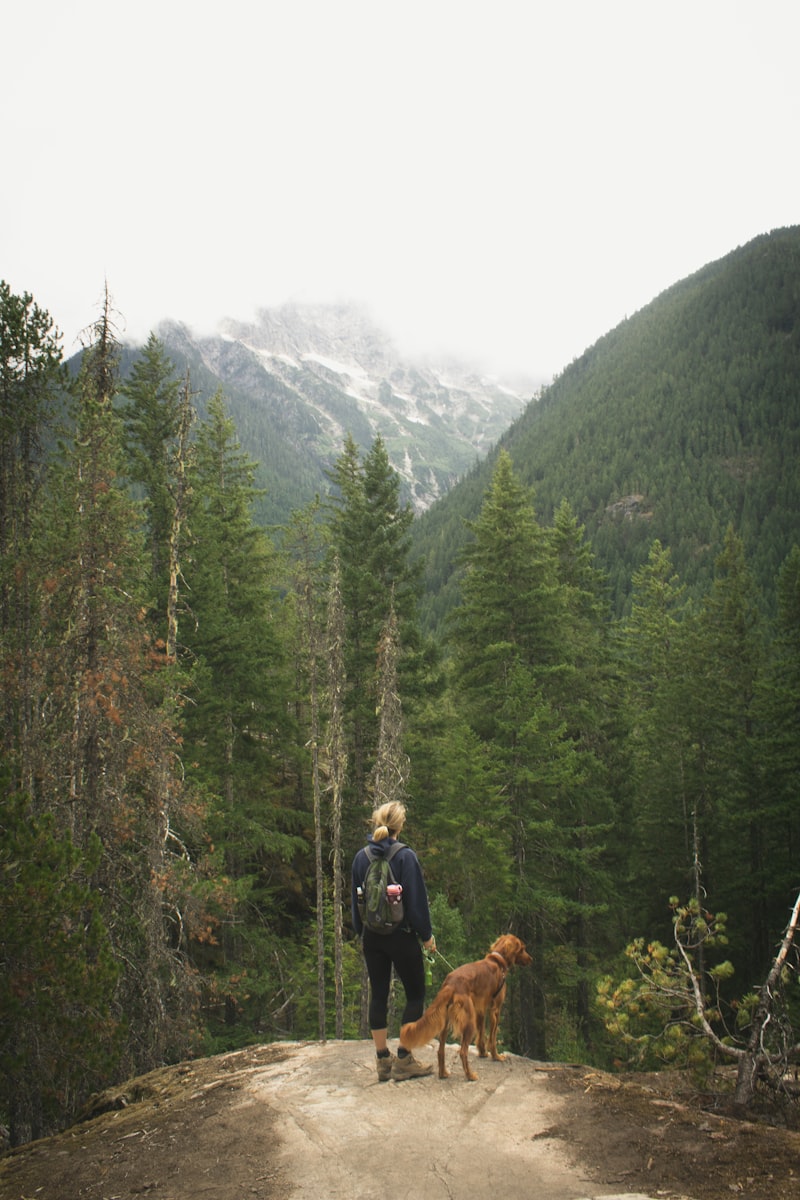 The goal of biking with your dog is shared experience — whether your dog runs alongside or rides in a trailer, the adventure is the same.
| Dog Type |
Can run alongside? |
Best method |
Distance guide |
High-energy large breeds
Border Collies, Huskies, Weimaraners |
Yes — best candidates |
Running alongside on flat, soft terrain |
Up to 10–15 miles once fit |
Medium breeds
Labradors, Golden Retrievers, Boxers |
Yes — with conditions |
Running alongside, not in peak heat |
3–6 miles — monitor panting closely |
Small breeds
Dachshunds, Pugs, French Bulldogs |
No — pace is unsafe |
Bike trailer only |
Any distance — they are passengers |
| Senior dogs (7+ years) |
No — joint stress risk |
Bike trailer only |
Any distance — monitor for fatigue |
| Puppies under 18 months |
No — growth plates at risk |
Bike trailer only |
15–20 minutes maximum |
Brachycephalic breeds
Pugs, Bulldogs, Boston Terriers |
Never — breathing risk |
Bike trailer only, shaded route |
30 minutes maximum, cool conditions only |
⚠ July heat changes everything
In July, pavement surface temperatures can reach 135°F (57°C) — hot enough to cause paw pad burns in under 60 seconds. In peak summer heat, trailer riding is the safe default for all dogs, or ride before 8am when pavement is still cool. Always apply the 7-second pavement test: if you cannot hold the back of your hand on the pavement for 7 seconds, it is too hot for your dog to run on.
The case for a bike trailer
A bike trailer solves every limitation of running a dog alongside a bicycle. It removes the pace constraint — your dog does not need to keep up. It removes the terrain constraint — pavement, gravel, and hills are equally fine for a passenger. It removes the breed constraint — a 10-pound Chihuahua and a 60-pound Labrador can both enjoy the same ride. And in summer, it removes the heat constraint entirely — your dog is not generating additional body heat through exertion.
What to look for in a dog bike trailer
✅
Weight capacity well above your dog's weight
A trailer rated to 66 lbs for a 40 lb dog gives you safety margin and stability. Never choose a trailer where your dog is at or near the stated capacity.
✅
Full mesh ventilation on all sides
Essential in summer. Mesh panels allow continuous airflow and prevent dangerous heat buildup inside the trailer. A sealed or poorly ventilated trailer can become dangerously hot within minutes.
✅
Internal leash attachment point
A clip inside the trailer keeps your dog from jumping out while in motion. This is a safety requirement, not optional.
✅
Reflective elements for road visibility
A reflector flag and reflective strips on the trailer make you visible to cars — particularly important for early morning or evening rides.
✅
Converts to stroller
A 2-in-1 trailer and stroller lets you continue the outing on foot once you arrive at your destination — no second vehicle needed.
How to train your dog for bike rides
Neither method — trailer riding nor running alongside — should be introduced without a brief training period. A dog that has never been near a bike needs a gradual, positive introduction before the first actual ride.
 Training should always be positive and never rushed — a dog that enjoys bike rides shows it from the very first session.
Training for trailer riding (5–7 days)
1
Introduce the trailer as a stationary object
Leave the trailer open in your living space or yard. Let your dog investigate voluntarily over 1 to 2 days. Place treats inside to reward voluntary entry. Never push or force the dog in — any negative association at this stage will persist.
2
Feed meals inside the trailer
Place your dog's food bowl inside the trailer for 2 to 3 days. Most dogs become comfortable entering and settling inside within 3 to 4 meal sessions.
3
Close the door briefly while your dog is inside
Once your dog enters voluntarily, begin closing the door briefly. Start with 30 seconds, reward calm behavior, and extend duration gradually over 2 to 3 sessions.
4
Attach to the bike and push before cycling
Attach the trailer to the bike and push it by hand — no cycling yet. Walk alongside so your dog hears the sounds and feels the motion in a familiar, controllable context first.
5
First ride — 5 minutes only, calm flat route
The first actual bike ride should be short, flat, and quiet. Five minutes is enough. End the session while your dog is still calm and positive. Give a high-value reward immediately after — a natural chew treat is ideal for a satisfying post-ride wind-down.
Training for running alongside (2–3 weeks)
Use a dog-specific bike leash that attaches to the bike frame — never hold a leash in your hand while cycling. Start on a flat, quiet path at a pace your dog can sustain comfortably. First sessions should be 5 minutes maximum. Add 2 to 3 minutes per session as fitness builds. Watch for early signs of tiring — slowing pace, heavy panting, or lagging behind — and stop before these become pronounced.
Safety rules for every ride
 Active dogs love outdoor exercise — but in summer heat, water access and shade stops are essential on any ride longer than 20 minutes.
Never attach a leash directly to your bike
If your dog suddenly pulls or stops, you will be thrown. Always use a purpose-built bike leash attachment that connects to the seat post or frame.
Do the 7-second pavement test before every summer ride
Place the back of your hand on the pavement for 7 seconds. If you cannot hold it there, it is too hot for your dog to run on. Ride before 8am or after 7pm in July.
Bring water on every ride over 15 minutes
Dogs dehydrate significantly faster than humans during exercise. A collapsible travel bowl in your ride bag is essential kit — not optional.
Check paw pads after every ride
Even on cooler days, pavement friction causes wear on paw pads over longer rides. Check for redness, softness, or cracking after any ride over 3 miles.
Keep your dog in your peripheral vision at all times
For dogs running alongside, keep them on your right side (away from traffic) and slightly behind your front wheel — not ahead of you where they can cut across your path.
Never force a dog to continue past their limit
Dogs have a strong drive to stay with their owner and will push past their physical limits. End every ride while your dog still appears comfortable — not when they start showing signs of exhaustion.
Your dog should wear ID on every ride
If your dog becomes separated from you during a ride, identification is the fastest route to reunion. Current phone number on their collar tag — always.
What to bring on every ride
✅
Water and a travel bowl
Enough for both of you plus extra for your dog. A folding silicone bowl in your ride bag weighs almost nothing.
✅
High-value post-ride chew treat
A long-lasting natural chew at the end of the ride reinforces the positive experience and settles your dog during the cool-down period.
✅
A drying towel
For rides near water, after wet grass, or when your dog needs a post-exertion wipe-down. A microfibre shammy dries faster and more thoroughly than a standard towel.
✅
Your phone
Navigation, emergencies, and — when your dog does something excellent — photos.
Gear at Whisker House — verified in stock
Every product below is directly matched to a need covered in this guide. Real photos. Real prices. Real answers to the questions a buyer actually asks before purchasing:

⭐ Hero product — direct match
2-in-1 Dog Bike Trailer Stroller with Reflector Flag
Red — $145.99 · Grey / White — $184.99 · 12 in stock
The question most buyers ask: "Will my dog actually fit comfortably, and will they tolerate it?" The interior fits dogs up to 66 lbs. Two full mesh ventilation windows on each side keep air flowing in summer heat. The internal safety clip keeps your dog secure without restricting movement. Converts from bike trailer to standalone stroller in seconds — no tools needed — so you can continue the outing on foot when you arrive somewhere bikes are not allowed. Available in Red ($145.99), Grey ($184.99), and White ($184.99).
"She was nervous the first time but by the second ride she was jumping in before I even attached it to the bike." — verified buyer
Shop Bike Trailer — from $145.99 →

✅ Supporting match — carry your kit
Rubyloo The Original Dog Travel Bag
from $48.95 — Grey, Beige, Pink, Paw Print, Navy · 1,155 in stock
The question most buyers ask: "What do I actually carry water, treats, poop bags, and a collapsible bowl in on a bike ride?" This bag was designed exactly for that problem. Multiple compartments keep everything organised and separate — water bottle upright, treats accessible, poop bags reachable without stopping. Shoulder strap or backpack carry. Fits everything you need for a 2-hour outing without looking like you packed for a week. 7 colour options.
"Finally a bag that has a specific place for everything. I never forget the water bowl anymore." — verified buyer
Shop Dog Travel Bag — from $48.95 →

✅ Supporting match — adventure collar
Rubyloo Stink-Proof Waterproof Dog Collar
$18.95 — Small, Medium, Large · 5 colours · 281 in stock
The question most buyers ask: "Will a fabric collar smell terrible after muddy or wet rides?" Standard nylon collars absorb water, mud, and sweat and develop a persistent odour within weeks. The Rubyloo is made from poly-coated nylon webbing that is completely non-absorbent — rinse it and it is clean, odour-free, and dry within minutes. Rust and corrosion-resistant metal alloy buckle with dual rivets. Soft enough to wear all day. Sizes: Small (13–15"), Medium (16–19"), Large (20–23").
"This is the third collar I've tried and the first one that doesn't smell after a beach run. Genuinely stink-proof." — verified buyer
Shop Waterproof Collar — $18.95 →

✅ Supporting match — paw protection on pavement
Waterproof Anti-Slip Dog Boots — Reflective
$47.99 — 32 size and colour combinations · Massive stock
The question most buyers ask: "Will my dog actually tolerate wearing boots, and do they stay on?" Most dogs take 2 to 3 short sessions to adjust — the rugged anti-slip sole grips without restricting natural gait. 100% waterproof. Reflective straps improve visibility for evening rides. In July when asphalt hits 135°F, these are the most direct solution for dogs that run alongside the bike on paved routes. Available for medium and large breeds across 32 size and colour variants.
"After two short practice sessions she stopped noticing they were there. Completely worth it in summer." — verified buyer
Shop Dog Boots — $47.99 →

✅ Supporting match — post-ride dry down
Rubyloo Dog Drying Shammy Towel — 2 Pack
$34.95 — 2 towels, 34" x 26" each · 12 in stock
The question most buyers ask: "Does it actually dry a wet dog or just push the water around?" The microfibre shammy absorbs 2x more water than a standard bath towel the same size. Press it against the coat — do not rub — and water draws out in seconds. 34" x 26" covers a large-breed dog in one pass. You get two in the pack — one for the car boot after a ride, one for home. Works for muddy paws, wet coats from water crossings, and dew-soaked grass on morning rides.
"My Golden was completely dry in under two minutes after a muddy trail run. I was genuinely impressed." — verified buyer
Shop Drying Towel 2-Pack — $34.95 →

✅ Supporting match — post-ride reward chew
Country Living Beef Backstrap Tendon Chews — 5 Pack
$15.29 — 5 chews, 4" to 7" each · 10 in stock
The question most buyers ask: "How long does one chew actually last?" Each beef backstrap tendon keeps most medium breeds occupied for 20 to 40 minutes — enough to cover the entire post-ride cool-down. Single ingredient: 100% beef backstrap tendon. No additives, no artificial preservatives, grain-free. The natural chewing motion during rest also supports dental health and reduces post-exercise restlessness. Give one immediately after the ride while your dog settles — it creates a strong positive association with returning home from a bike ride.
"My Border Collie goes wild for these after a run. Keeps him completely settled for the whole drive home." — verified buyer
Shop Tendon Chews — $15.29 →
💡 The complete kit — what every ride needs
Trailer + travel bag + waterproof collar + tendon chews covers every ride. Add the boots if your dog runs on paved routes in summer heat. Add the drying towel if you ride near water or through morning dew. All six products ship across the United States from Whisker House.
Myths vs. facts about biking with dogs
MythAny energetic dog can run alongside a bike.
FactEnergy level is only one factor. Breed structure, joint health, age, and current fitness level all determine suitability. A highly energetic Bulldog cannot safely run alongside a bike due to respiratory and structural limitations. Suitability for running alongside must be assessed on all four factors, not energy alone.
MythA dog in a trailer is not getting any real benefit.
FactSensory and mental stimulation are as important as physical exercise. A dog in a trailer through a new environment receives continuous sensory input — smells, sounds, visual movement — that engages their brain in ways repetitive walking rarely does. For senior dogs and small breeds, trailer riding provides rich enrichment without joint stress.
MythDogs will stop naturally when they are tired.
FactDogs have a strong drive to stay with their owner and will push significantly past their physical limits to maintain pace. A dog running alongside will continue even when approaching dangerous exhaustion. The owner is responsible for monitoring signs of tiring and stopping before they become critical.
MythI can hold the leash in one hand while cycling.
FactThis is one of the most dangerous things a dog owner can do on a bike. If your dog pulls, cuts across, or stops suddenly, you have no ability to respond with one hand occupied. Use a purpose-built bike leash that attaches to the seat post or frame — both hands on handlebars at all times.
MythBike trailers are only for small dogs.
FactThe 2-in-1 Dog Bike Trailer at Whisker House supports dogs up to 66 lbs. Large breeds that are senior, recovering from injury, or not suited to running at cycling pace benefit from trailer riding just as much as small breeds do.
Frequently asked questions
How far can I bike with my dog?
For dogs running alongside: start at 1 to 2 miles and build over 2 to 3 weeks. Fit medium breeds can comfortably handle 3 to 6 miles. High-energy large breeds at peak fitness can handle 10 to 15 miles — but this takes months to build toward safely. For dogs in a trailer, distance is limited only by their comfort and temperature management — they are not physically exerting themselves, so heat and hydration are the limiting factors.
Can my puppy ride in a bike trailer?
Yes — trailer riding is actually the recommended method for puppies under 18 months because it provides enriching outdoor exposure without the joint stress of running on hard surfaces. Keep rides to 15 to 20 minutes maximum for puppies, avoid rough terrain that creates significant vibration inside the trailer, and make sure the internal leash attachment is always clipped to prevent jumping out.
My dog is afraid of the bike. What do I do?
Start by introducing the bike as a neutral object — leave it in your living space or yard where your dog can investigate and sniff it voluntarily over several days. Feed treats near the bike before asking your dog to be near it while you are on it. Never force proximity. For most dogs, fear of the bike dissipates within 5 to 7 days of calm, positive exposure. If your dog remains significantly distressed after two weeks, consult a positive reinforcement trainer before proceeding.
What is the best surface for biking with a running dog?
Soft surfaces are always preferable — grass, dirt trails, packed gravel, and crushed stone paths all provide more joint cushioning and less paw pad wear than pavement. In summer, soft surfaces also stay significantly cooler than asphalt. If you must use pavement, ride before 8am when it has had overnight to cool, and always apply the 7-second hand test before letting your dog run on any paved surface.
Should I feed my dog before or after a bike ride?
After, not before — particularly for larger breeds prone to bloat. Exercising on a full stomach increases bloat risk in deep-chested breeds. Feed your dog at least 1 to 2 hours before exercise, or ideally wait and feed after the ride and a 30-minute cool-down period. A post-ride natural chew — like a beef tendon — during the cool-down is fine and provides positive reinforcement without triggering bloat risk.
How do I know if my dog enjoyed the bike ride?
Positive signals: approaching the bike or trailer enthusiastically before rides, alert and relaxed body language during the ride, and settling calmly afterward. Negative signals: reluctance to approach the trailer, whining or pawing during the ride, flat or tucked body posture, or significant behavioral changes after rides. Most dogs that are properly introduced and not pushed past their limits show clear enjoyment within 3 to 4 sessions.
Final recommendations
Biking with your dog is one of the most rewarding outdoor activities you can share — it scales to any dog's ability, enriches their life in ways a daily walk rarely does, and gives you a reason to get outside that benefits both of you. Here is how to start well:
1
Decide on your method before buying any gear. Assess your dog honestly against the breed and age table above. If your dog is small, senior, brachycephalic, or a puppy — start with a trailer. That single decision drives everything else.
2
Introduce gradually and never rush the first ride. A dog that has a bad first experience with a bike or trailer will carry that association for a long time. Five minutes of positive introduction is worth more than the first 10 rides.
3
In July, always ride before 8am or after 7pm. The pavement temperature risk in peak summer heat is real and rapid. Cooler morning and evening rides are better for your dog in every way — temperature, humidity, and traffic levels.
4
Pack the travel bag before every ride. Water, collapsible bowl, tendon chew for after, poop bags. Takes 90 seconds to pack and covers every situation you will encounter.
5
End every session with a high-value reward. A beef tendon chew after the ride creates a strongly positive association with the whole experience. Your dog begins to connect the sight of the bike or trailer with the anticipation of something they love — making every subsequent ride easier to start.
6
Switch to a waterproof collar for outdoor adventures. Standard nylon collars become smelly and crusty after wet rides within weeks. A waterproof collar is rinse-clean in seconds and stays odour-free for life — a small upgrade that makes a disproportionate difference to how much you enjoy the post-ride routine.
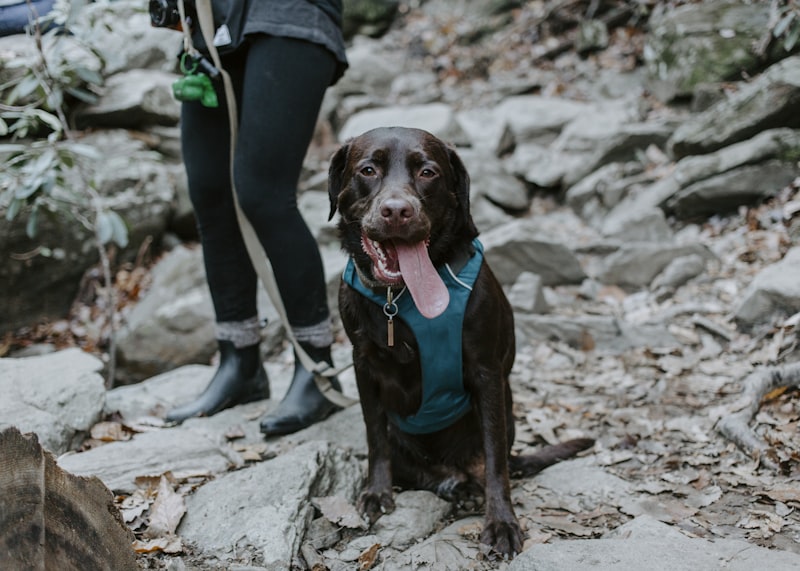 The point of biking with your dog is the shared experience — whether they are running alongside or watching the world go by from a trailer, the adventure belongs to both of you.
Every adventure starts with the right gear.
The 2-in-1 Bike Trailer, Dog Travel Bag, Waterproof Collar, Dog Boots, Drying Towel, and Beef Tendon Chews are all in stock at Whisker House. Ships across the United States.
Shop active dog gear at Whisker House →
WH
Whisker House
Whisker House is a curated pet supply store built by pet owners who believe your dog deserves a full life — indoors and out. Every product is chosen because it solves a real problem for real pets, not because it looks good on a shelf. Backed by 780+ verified customer reviews, shipping across the United States at whiskerhouse.store.
