Cat Enrichment · July 2026
Is Your Indoor Cat Bored?
7 clear signs your cat is understimulated — and the enrichment toys that fix it from $11.99.
Updated: July 16, 2026 Cat Enrichment 7 min read
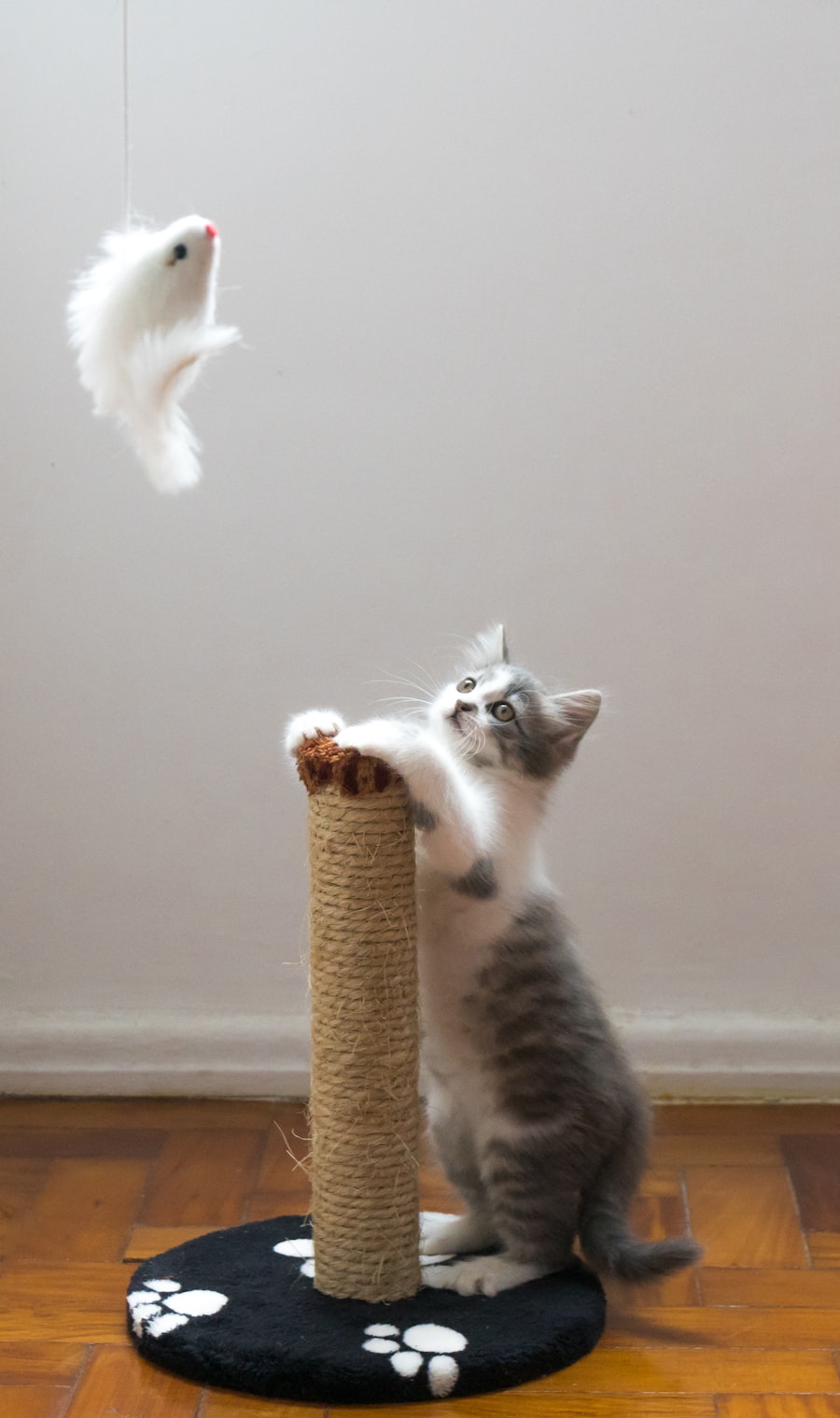
Quick answer: Indoor cats are natural hunters. They are hardwired to stalk, chase, pounce, and scratch for several hours every single day. When that drive has nowhere to go — no prey, no territory to patrol, no environmental challenges — it turns inward. The result is boredom, frustration, and behavior that most owners misread as personality. The good news is the fix is simple, affordable, and takes less than 10 minutes to put in place.
Key takeaways
✓Cats need an average of 2 hours of active play or hunting behavior per day to stay mentally healthy.
✓Boredom in cats presents as destructive behavior, aggression, overeating, and excessive grooming — not just sleeping more.
✓Interactive toys that trigger hunting instincts are more effective than passive toys left on the floor.
✓Scratching is a natural, necessary behavior — redirecting it is far more effective than trying to stop it.
✓Environmental enrichment reduces vet visits — bored cats develop more stress-related health issues than stimulated ones.
✓Effective enrichment for indoor cats starts from $11.06 at Whisker House.
Your cat is asleep again. On the couch. After being asleep on the bed. Before that, they were asleep on the windowsill. You think: well, cats just sleep a lot. And you are right — cats do sleep a lot. But there is a difference between a cat that sleeps because they are content and well-exercised, and a cat that sleeps because they have nothing else to do.
The second cat is the one who occasionally tears through your house at 3am, knocks things off shelves for no apparent reason, or bites you when you try to pet them after a few seconds. That is not a personality quirk. That is a bored cat trying to create the stimulation their environment is not providing.
Why indoor cats get bored — the biology
A domestic cat's brain and body were shaped by millions of years of hunting. In the wild, a cat spends roughly 6 to 8 hours per day engaged in hunting-related activity — stalking, chasing, pouncing, catching, and consuming prey. This is not optional behavior. It is a fundamental biological drive that does not switch off just because food arrives twice a day in a bowl.
When you bring a cat indoors and remove the need to hunt, you remove the primary source of mental and physical stimulation their brain expects. The hunting drive remains. The outlets disappear. What you are left with is a cat who is physiologically primed for activity and frustration living in an environment that offers almost none.
This is not a flaw in the cat. It is a mismatch between what cats need and what most indoor environments naturally provide. The solution is not to punish boredom behaviors — it is to provide the outlets that make those behaviors unnecessary.
💡 The hunting quota
Behaviorists recommend indoor cats receive the equivalent of 2 to 3 short hunting sessions per day — ideally 10 to 15 minutes each. This does not need to involve you directly. Toys that move unpredictably, tracks with balls to bat, and puzzle feeders all count toward this quota. The goal is to trigger the stalk-chase-pounce sequence at least twice daily.
7 signs your cat is understimulated right now
These signs are often dismissed as personality traits or "just how cats are." They are not. Each one is a specific signal that your cat's environment is not meeting their behavioral needs.
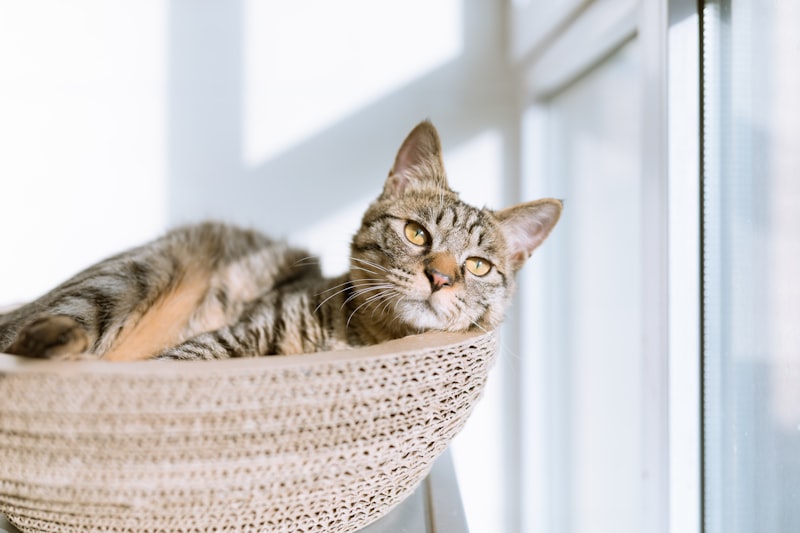 A cat that stares out the window for hours is not relaxing — it is looking for stimulation their environment is not providing.
1
Excessive sleeping beyond 16 hours a day Common sign
Cats sleep 12 to 16 hours in healthy cycles. Sleeping significantly beyond this — especially if they seem flat, unresponsive, or disengaged even during waking hours — suggests there is nothing in their environment worth being awake for. This is lethargy from boredom, not contentment.
2
Knocking objects off surfaces Very common
This is not mischief. Pushing objects off tables and shelves is a hunting behavior — the cat is testing whether the object will move, flee, or react. It is the closest they can get to prey behavior in a static environment. The more often you see this, the more bored they are.
3
Sudden bursts of frantic running at night Misunderstood sign
Often called "the zoomies," these nocturnal sprints are the cat releasing pent-up hunting energy they could not express during the day. Cats are naturally crepuscular — most active at dawn and dusk. If they have been inactive all day, that energy does not disappear. It comes out at 3am instead.
4
Overeating or obsessing about food Often overlooked
In the wild, eating is the payoff for a successful hunt. When indoor cats have nothing to hunt, some redirect their hunting instinct toward food — approaching the bowl repeatedly, begging, or eating far faster than necessary. This is not always genuine hunger. It is often a displacement behavior for unmet hunting drive.
5
Excessive self-grooming or overgrooming Stress indicator
Grooming is self-soothing behavior in cats. A bored or stressed cat may groom far beyond what hygiene requires, sometimes to the point of creating bald patches or skin irritation. If your cat has noticeably thinning patches of fur that are not explained by seasonal shedding, boredom and stress are the most common culprits after medical causes are ruled out.
6
Unprovoked aggression or biting Frequently misread
A cat who bites or swats during petting — especially after a short time — is often overstimulated, not aggressive by nature. But a cat who redirects this energy onto humans consistently is frequently one who has no appropriate outlet. Providing interactive play before handling sessions often reduces this dramatically within a week.
7
Scratching furniture, walls, or carpets Redirect, do not stop
Scratching is not destructive behavior. It is a fundamental biological need — cats scratch to maintain their claws, stretch their muscles, and mark their territory visually and chemically. A cat scratching your sofa is not misbehaving. They are looking for an appropriate surface and not finding one. The solution is to provide one, not to punish the behavior.
What enrichment actually means for a cat
Enrichment is a word that gets used loosely in pet care, but for cats it has a specific meaning: anything that triggers the natural sequence of stalk, chase, pounce, catch, and consume. This is the behavioral loop cats are wired to complete. Enrichment is not about keeping your cat entertained in the human sense — it is about giving their brain and body the activities they were built for.
Enrichment falls into four categories. The most effective indoor environments provide at least two of these consistently:
1. Prey-like movement
Anything that moves unpredictably — like a ball rolling around a track, a spinning feather, or a toy on a string — triggers the stalk-and-chase phase. Static toys lying on the floor rarely engage cats for more than a few seconds. Movement is the key variable. This is why a crumpled piece of paper skidding across the floor gets more engagement than a $30 plush toy sitting still.
2. Scratching and climbing surfaces
Cats need vertical territory. In the wild, height means safety, vantage points, and status. An indoor cat with no elevated surfaces or scratching options is a cat in an impoverished environment regardless of how comfortable their bed is. A multi-level cat tower with scratching surfaces addresses both the need for height and the need to scratch in one piece of furniture.
3. Puzzle feeding
Delivering food in a bowl means the "hunt" is over before it starts. Using a food puzzle, a slow feeder, or hiding small portions of treats around the home makes the cat work for food — activating the hunting sequence and providing mental stimulation in the process. Even five minutes of this before a meal meaningfully reduces boredom behaviors in most cats.
4. Social and tactile engagement
Cats are not as solitary as their reputation suggests. Interactive play with their owner — even 10 to 15 minutes per session, twice daily — provides both the movement and the social bonding that supports mental health. The key word is interactive: waving a toy while looking at your phone is less effective than genuinely engaging your cat in a play session with eye contact and movement variation.
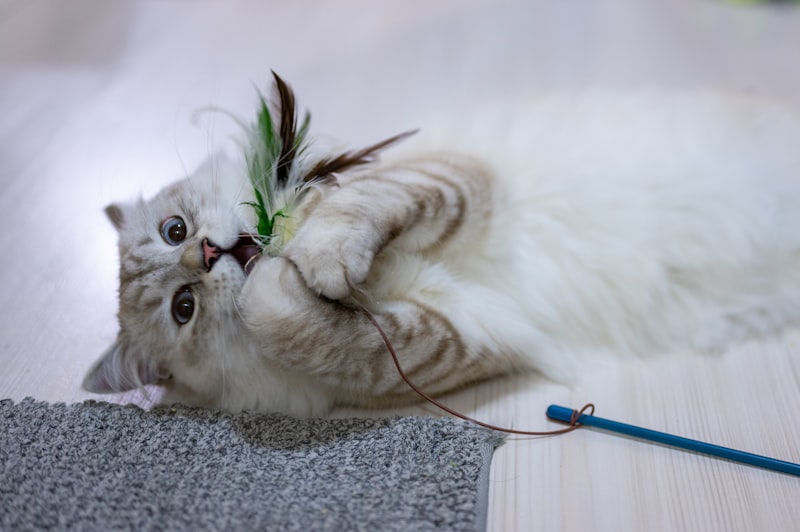 Interactive play that triggers the stalk-chase-pounce sequence is far more effective than leaving static toys on the floor.
Why scratching is not a problem — it is a need
Of all indoor cat behaviors, scratching is the one most likely to be punished — and least likely to respond to punishment. That is because punishment does not address the underlying need. It just teaches the cat to scratch somewhere else, usually somewhere you have not yet found.
Understanding why cats scratch makes the solution obvious. Cats scratch for three distinct reasons: to remove the outer sheath of their claws as they grow, to stretch the muscles of their back and shoulders, and to leave visual and scent marks on surfaces they consider part of their territory. All three of these drives are biological and non-negotiable.
The solution is always substitution, not suppression. Put a scratching surface next to the furniture they are currently using. Once they are reliably using the scratcher, you can gradually move it a few inches per day toward a more convenient location. A sisal surface — the rougher, more fibrous material — mimics bark most closely and tends to be more satisfying to cats than carpet-covered alternatives.
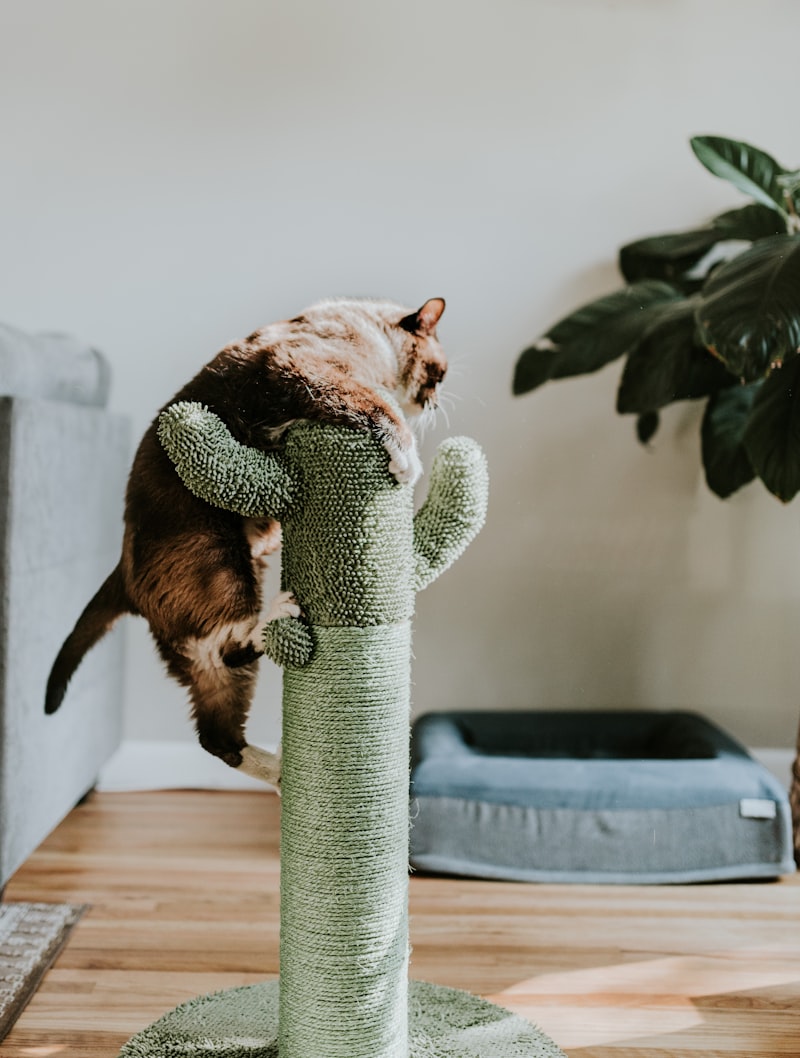 A multi-tier cat tree addresses scratching, climbing, and vertical territory needs in one — the most efficient single piece of cat enrichment.
💡 Placement matters more than the scratcher itself
Cats scratch in prominent, central locations — not hidden corners. They are marking territory, so the location needs to be visible. If you put a scratcher behind the sofa or in a spare room, your cat will ignore it and continue using the sofa. Put it next to where the scratching is happening, in a place the cat already considers important. Then move it slowly over time if needed.
The enrichment products that actually work
Not all cat toys are created equal. The most effective ones share a common characteristic: they trigger the natural hunting sequence rather than just sitting on the floor waiting to be noticed. Here is what Whisker House stocks that actually makes a difference:
3-Tier Wooden Cat Tower Track Toy
from $24.99
Best all-round enrichment
Three tiers of spinning track balls with a feather attachment. Solid wood, handmade, non-slip base. Each tier spins independently — the balls move unpredictably, triggering the stalk-and-bat sequence repeatedly. Works for solo play when you are not home. Available in 2-tier ($24.99) and 3-tier ($39.99).
Shop Cat Tower Toy — from $24.99 →
Oval Cat Scratcher Bed
$11.99
Best for scratching redirection
Oval sisal surface that doubles as a resting pad. The rough sisal texture mimics bark — exactly what cats instinctively prefer for scratching. Large enough to stretch out on fully. Works as both a scratcher and a lounge, so it gets used in both active and passive moments. From $11.99.
Shop Cat Scratcher Bed — $11.99 →
Foldable Travel Litter Box
from $13.99
Best for travel and routine
Lightweight, waterproof, folds completely flat for storage or travel. Providing a consistent, clean litter environment is a direct component of cat wellbeing — stress from litter box issues is one of the most common triggers of displacement behaviors like overgrooming and aggression. From $13.99 in Black or Gray.
Shop Foldable Litter Box — from $13.99 →
ROJECO Smart Auto Pet Feeder
$70.99
Best for feeding enrichment
WiFi-controlled, 2L capacity, portion programmable from your phone. Scheduled feeding times create anticipation — a form of environmental enrichment in itself. When cats know food comes at a consistent time, the period before feeding becomes an active waiting and alert state rather than passive sitting. Reduces food-related boredom behaviors significantly.
Shop Smart Feeder — $70.99 →
💡 Rotate toys to keep them novel
Cats habituate quickly to static stimuli. A toy that is exciting on day one becomes invisible by day five if left out continuously. Keep two or three toys in rotation, swapping them every few days. When a "new" toy comes out — even one the cat has seen before — it registers as novel again after a break. This makes a small number of toys far more effective than a large collection all left out simultaneously.
Building a daily enrichment routine
Enrichment does not need to be elaborate or time-consuming. The most effective indoor cat routines are built around predictable daily windows of activity that match the cat's natural crepuscular rhythm — most active at dawn and dusk.
Morning (5–10 minutes)
Before feeding, spend 5 to 10 minutes with an interactive toy — the wooden tower track, a wand toy, or even a crumpled piece of paper. The goal is to trigger the stalk-and-chase sequence before the "reward" of food. This mimics the hunt-then-eat sequence cats are wired for and significantly reduces food-obsession behavior throughout the day.
Midday (passive enrichment)
Leave the wooden track tower accessible during the day. Rotate which toy is out so it feels novel. Position the cat scratcher near a window if possible — watching birds or movement outside provides visual stimulation that occupies cats for extended periods without any input from you.
Evening (10–15 minutes)
The most important session of the day. Cats are most active at dusk, so an evening play session timed before their final meal is the most effective way to discharge pent-up energy and prevent nocturnal zoomies. Wind down the session gradually — slow the toy movement over the final few minutes — rather than stopping abruptly, which leaves cats in an aroused state.
⚠ Consistency matters more than duration
Two 10-minute sessions every day will produce far better behavioral outcomes than occasional 45-minute sessions. Cats thrive on routine. A consistent daily enrichment window quickly becomes something they anticipate and prepare for — which is itself a form of enrichment, as the anticipation period engages their alertness and focus.
Myths vs. facts about indoor cat behavior
MythCats are independent and do not need much stimulation.
FactCats are independent in the sense that they do not require constant social attention from humans. They are not independent from the need for environmental stimulation. A cat without adequate mental and physical enrichment will develop behavioral problems and stress-related health issues just as reliably as a dog would.
MythIf my cat were bored, they would tell me.
FactCats rarely vocalize distress in ways humans recognize as distress. Boredom in cats presents as behavioral changes — overgrooming, aggression, food obsession, or excessive sleeping — that owners frequently attribute to personality rather than environment. By the time it is obvious something is wrong, the behavior is often entrenched.
MythGetting a second cat will solve boredom.
FactA second cat may help, or it may create additional stress if the cats are not compatible. A second cat is not a substitute for environmental enrichment — it is an additional enrichment layer on top of an already adequate environment. Introducing a second cat into a boredom-impoverished environment gives you two bored, potentially stressed cats instead of one.
MythIndoor cats live longer because they are safer, so the trade-off is worth it.
FactIndoor cats do live longer on average, but the quality of that longer life depends entirely on the quality of their indoor environment. A long life spent in an understimulated environment is not a better outcome than a shorter but richly stimulated one. The goal is not just longevity — it is a long, mentally and physically healthy life.
MythMy cat does not play with toys, so they must not need enrichment.
FactA cat that does not engage with toys is often a cat that has learned those toys do not behave like prey. Static toys do not move, flee, or respond — so the hunting instinct does not engage. Toys with movement, unpredictability, and variation almost always succeed where static toys fail. The issue is toy selection, not the cat's need for play.
Frequently asked questions
How many hours a day should I play with my indoor cat?
The standard recommendation from feline behaviorists is two to three sessions of 10 to 15 minutes each per day. The morning and evening sessions are the most important, as they align with your cat's natural crepuscular activity peaks. Total active play time of 20 to 30 minutes daily is sufficient for most adult cats when combined with independent enrichment like a track toy they can use alone.
My cat ignores every toy I buy. What am I doing wrong?
Almost certainly it is a movement issue, not a preference issue. Cats are triggered by movement that mimics prey — erratic, unpredictable, and stoppable. Try dragging a toy under a blanket, around a corner, or along the floor rather than dangling it in front of your cat. The moment it disappears and reappears, the hunting instinct activates. Toys with spinning or rolling elements that move independently are also far more effective than plush toys that sit still.
Is it cruel to keep a cat indoors?
No — provided the indoor environment meets their behavioral needs. Indoor cats face fewer risks from traffic, predators, disease, and injury. The welfare concern is not the indoors itself but an impoverished indoor environment. A cat with adequate enrichment, space, scratching surfaces, interactive play, and social engagement can live an excellent quality of life entirely indoors. The issue is when "indoor" means unstimulated.
How do I stop my cat from scratching the sofa?
Put a scratching post directly next to the sofa — not across the room, next to it. The cat is scratching that sofa because it is in a location they consider important territory. A scratcher in the corner of a spare room will be ignored. Once the cat is reliably using the scratcher next to the sofa, you can slowly move it a few inches per day over several weeks. Double-sided tape on the sofa temporarily discourages scratching there while the transition happens.
My cat races around the house at 3am every night. Is something wrong?
Nothing is medically wrong, but it is a reliable sign that your cat has unspent energy from the day. The fix is an active play session in the evening before bed — ideally 20 to 30 minutes of chase-and-pounce play ending with a small meal. This mimics the hunt-eat-groom-sleep sequence cats follow naturally. Most cats who receive an adequate evening play session stop the nocturnal activity within a week.
At what age do cats stop wanting to play?
Cats remain playful well into old age — the sessions just get shorter and the movement slower. A 12-year-old cat may only want 5 minutes of gentle play rather than 15 minutes of intense chase, but the behavioral need does not disappear with age. Senior cats that stop playing altogether are often doing so because of joint pain, dental issues, or illness — not simply because they are old. If your previously playful senior cat has stopped engaging entirely, a vet check is worthwhile.
Final recommendations
Meeting your indoor cat's enrichment needs does not require expensive setups or hours of your time. It requires consistency, the right tools, and understanding what you are actually solving for — not entertainment, but the expression of natural behavior. Here is where to start:
1
Add one interactive toy with movement. The 3-Tier Wooden Cat Tower Track Toy is the single best starting point — it works independently when you are not home and triggers the stalk-and-bat sequence repeatedly throughout the day.
2
Place a sisal scratcher next to wherever your cat currently scratches. Do not move it to a more convenient spot until the cat is reliably using it. Location is more important than the scratcher itself.
3
Run an active play session every evening before the last meal. 10 to 15 minutes of chase play followed immediately by food mimics the hunt-eat sequence and significantly reduces nocturnal activity and morning food-begging behavior.
4
Rotate toys every few days. Do not leave all toys out simultaneously. Rotating makes familiar toys feel novel again without buying new ones. Two or three toys in rotation is more effective than ten toys left out permanently.
5
Position a scratcher or toy near a window. The combination of visual stimulation from outside and a physical activity option creates a self-sustaining enrichment zone that occupies cats for hours without any input from you.
6
Give it two weeks before judging results. Behavioral changes from enrichment improvements typically become visible within one to two weeks as the cat adjusts to having appropriate outlets. Do not expect overnight results — expect a gradual reduction in the signs you identified in section 2.
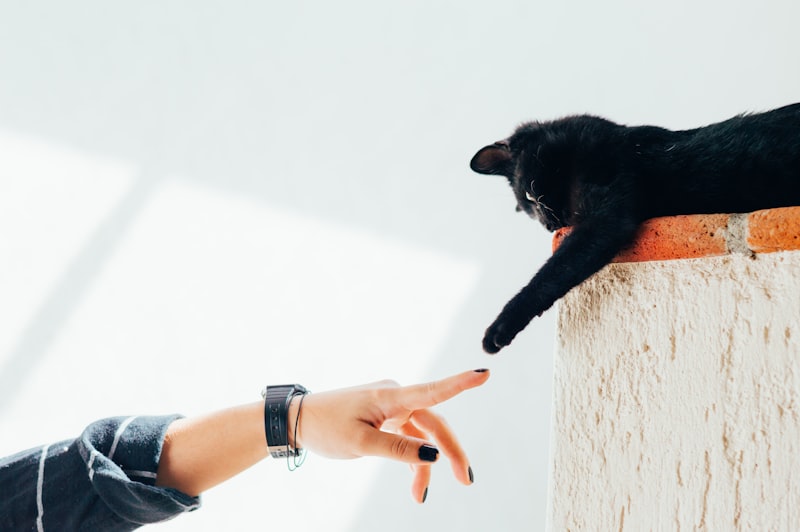 Two 10-minute interactive play sessions per day will produce better behavioral results than any toy left unsupervised on the floor.
Give your indoor cat what they were built for.
The 3-Tier Wooden Cat Tower, Oval Sisal Scratcher Bed, Foldable Litter Box, and Smart Auto Feeder are all in stock now at Whisker House. Ships across the United States.
Shop cat enrichment at Whisker House →
WH
Whisker House
Whisker House is a curated pet supply store built by pet owners who believe every cat deserves an environment that matches what they were built for. Every product is chosen because it solves a real problem for real pets — not because it looks good on a shelf. Backed by 780+ verified customer reviews, shipping across the United States at whiskerhouse.store.
