Dog Health & Prevention · September 2026
Natural Flea & Tick Prevention for Dogs: What Actually Works
Fall doesn't mean fleas and ticks are done for the year — 2026's parasite forecast says the opposite. Here's what's actually documented about natural prevention, and where it fits alongside a real routine.
Updated: September 8, 2026
Dog Health
9 min read

Quick answer: Natural, plant-based flea and tick products can genuinely help as one layer of a prevention routine, but the research on essential oils like cedarwood, lemongrass, rosemary, and geranium is mixed and inconsistent rather than proven — some show real repellent activity in lab conditions, none are shown to fully replace a vet-recommended preventative. Treat a natural shampoo as a real tool for the dog in front of you today, not a stand-alone shield, and check your dog for ticks after every outdoor outing regardless of what product you use.
Key takeaways
✓The Companion Animal Parasite Council's 2026 forecast shows tick season extending later into fall and expanding into states that used to see little risk.
✓"Ticks don't feed 365 days a year, but they do feed 12 months a year" — CAPC's own framing for why year-round prevention beats seasonal prevention.
✓Evidence for essential oils as flea/tick repellents is real but inconsistent — some oils show promise in lab tests, and studies lack standardized methods.
✓A natural shampoo treats what's already on your dog; it doesn't prevent tomorrow's exposure the way a vet-prescribed preventative does.
✓Daily tick checks, focused on ears, collar area, armpits, between toes, and the tail, are the most reliable low-tech layer of protection you have.
Most flea and tick content online falls into one of two camps: a "just use the chemical preventative and don't think about it" camp, or an "essential oils are all you need" camp. Neither one is quite honest about what the evidence actually shows. This guide sits between them — what natural, plant-based products are genuinely good for, what they aren't proven to do, and how to build a routine for your dog that doesn't depend on any single product doing all the work.
Why fall is still tick season
It's tempting to relax on prevention once summer ends. The Companion Animal Parasite Council's 2026 forecast is one of the clearer signals that this instinct works against your dog. Blacklegged ticks, the species responsible for Lyme disease, are expanding well beyond their traditional Northeast and Upper Midwest range into states like Illinois, Indiana, Kentucky, Michigan, North Carolina, Ohio, Tennessee, and West Virginia, with continued movement into the Northern Plains. Lone star ticks and brown dog ticks, tied to ehrlichiosis and anaplasmosis, are expanding too, with sustained high risk across the Southeast, Southwest, and South Central states.
CAPC's forecasting model has held roughly 94% accuracy since 2012, so this isn't a vague warning — it's a specific, geography-level prediction. Reporting on the forecast, the American Veterinary Medical Association summarized CAPC's core point in a single line worth remembering: "ticks don't feed 365 days a year, but they do feed 12 months a year." Ticks go quiet in the coldest stretches, not on a fixed calendar date — and a mild fall week is exactly when an unprotected dog picks one up.
💡 Why this matters in September specifically
Warming trends and longer mild-weather windows are part of what's driving the range expansion CAPC describes. A prevention routine that quietly stops in September is built for a season that no longer exists in most of the country.
How fleas and ticks actually get on your dog
Ticks don't jump or fly — they climb onto tall grass, brush, or leaf litter and wait for a passing dog to brush against them, a behavior called questing. Fleas are more opportunistic, picking up a ride from infested soil, another animal, or a yard that already has an established population. Both prefer the same terrain your dog probably loves: woods, tall grass, brush lines, and shaded, humid spots.
🌾
Tall grass and brush
Ticks quest from the tips of grass and low shrubs at exactly leg-and-belly height for most dogs.
🌳
Wooded trails and leaf litter
Shade and moisture let ticks survive longer between meals, which is why trail edges are a common hot spot.
🏡
Your own yard
Fleas especially can establish in shaded, humid yard corners and under porches, not just on hiking trails.
Per the CDC, ticks most commonly attach around a dog's ears, eyelids, collar line, underarms, between the toes, and around the tail — all places worth knowing before you get to the checking section below.
What natural repellents actually do
Plant-based flea and tick products, including shampoos built around cedarwood, lemongrass, rosemary, and geranium oils, are a genuinely different approach from a synthetic pesticide — but "different" and "proven equally effective" aren't the same claim, and it's worth being honest about which one the evidence supports.
A research review from the Tisserand Institute, an organization dedicated to evidence-based aromatherapy research, found the picture is genuinely mixed. Some oils showed real promise: clove and cinnamon provided measurable protection beyond an hour in lotion formulations, and one study found Virginian cedarwood offered "useful repellency," though a separate study rated it less effective than oregano or clove. Geranium showed activity when a specific isolated compound was tested, rather than the whole oil. The review's own conclusion is worth quoting directly: inconsistent testing methods, missing controls, and a lack of standardized protocols "preclude a definitive statement that essential oils at specific concentrations and combinations are suitable for effective tick control."
⚠ These products are formulated for dogs, not cats
Cats process essential oils very differently from dogs, and some oils that are fine on a dog's coat can be genuinely harmful to a cat. Don't assume a dog-formulated plant-based shampoo or spray is safe to use on a cat in the household — check with your vet first.
None of this means a plant-based shampoo is pointless — a bath with active ingredients that fleas and ticks find unpleasant is a real, useful step, especially for a dog who's already scratching. It means the honest role for a product like this is one layer in a routine, not a stand-alone substitute for the prevention your vet would recommend for a dog with real exposure to ticks and fleas.
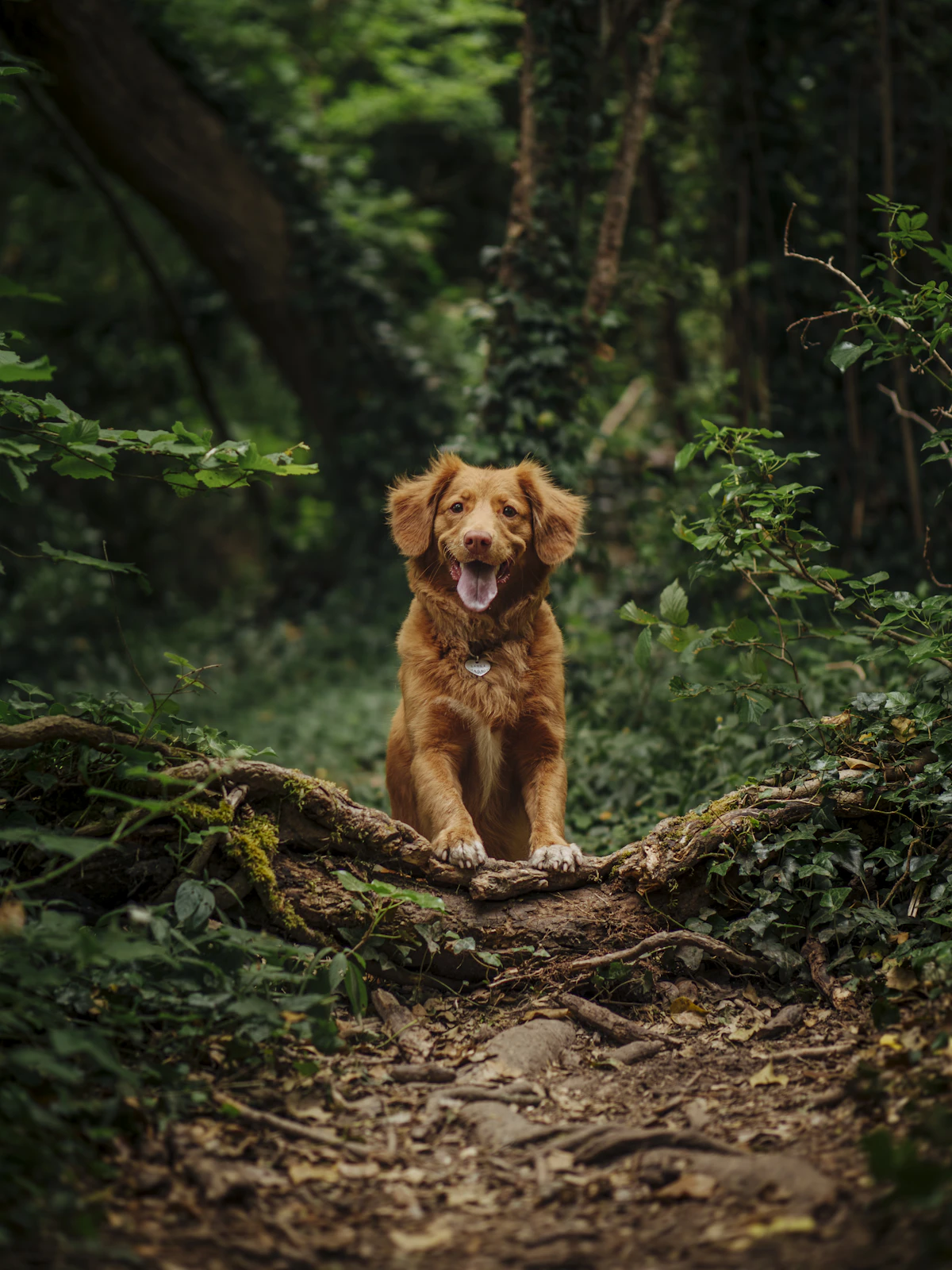 Tall grass is where most ticks wait for a passing dog to brush against them.
How to check your dog for ticks
The CDC's most consistent, low-effort recommendation is also its most useful one: check dogs who go outdoors for ticks daily, and remove any you find right away. A tick usually needs time attached to transmit disease, so catching one early meaningfully lowers the risk even after exposure has already happened.
1
Run your hands over the whole body first
Feel for any small bump before you look — ticks are easier to find by touch in a thick coat than by sight alone.
2
Check the high-risk spots closely
Ears (inside and around the base), eyelids, the collar line, underarms, between the toes, and around and under the tail.
3
Remove an attached tick right away
Use fine-tipped tweezers, grip close to the skin, and pull straight up with steady pressure — don't twist or crush the body.
4
Watch for changes over the following weeks
Tickborne illness symptoms can take one to three weeks to appear. Lethargy, appetite changes, or lameness after a known tick exposure are worth a vet call.
Building a real prevention routine
CAPC's clearest recommendation is consistency, not any single product: "consistent, year-round use of products that kill and/or repel ticks and mosquitoes." A routine that actually holds up combines a few honest layers rather than betting everything on one.
Start with what your vet recommends for your dog's actual risk level — where you live, how much time your dog spends in brush or woods, and what CAPC's regional forecast says about your area. Layer a plant-based shampoo on top for the dogs already dealing with a flea or tick problem, or as a between-preventative bath that also takes care of skin and coat. Add a daily hands-on check as the layer that costs nothing and catches what everything else missed.
💡 A bath treats today, not next week
Think of a flea and tick shampoo the way you'd think of washing off a spill — it deals with what's already there. It isn't formulated to keep protecting your dog on tomorrow's walk the way a labeled preventative product is.
Real products to consider
Three honest pieces of a routine: a plant-based shampoo for the bath itself, a gentle follow-up shampoo for skin that's been irritated by scratching, and wipes for a quick check-and-clean after a walk through brush or grass.

The bath
PRIDE+GROOM THE FLEA+TICK Shampoo
$32.00 · 16 oz
A wet shampoo built around cedarwood, lemongrass, rosemary, and geranium oils in place of a conventional synthetic pesticide, kept to the same skin-first formulation as the rest of the PRIDE+GROOM line. Follow the label for frequency, and check with your vet if your dog is also on a prescribed preventative or has an active infestation.
Shop THE FLEA+TICK Shampoo — $32.00 →

For irritated skin
PRIDE+GROOM THE SENSITIVE ONE Dog Shampoo
From $20.00
A hypoallergenic, soothing shampoo for a dog whose skin is already irritated from scratching at fleas — a reasonable follow-up bath once the pest treatment is done, rather than repeating the flea shampoo more often than the label recommends.
Shop THE SENSITIVE ONE — From $20.00 →

For after the walk
PRIDE+GROOM THE SWIPE Pet Wipes
$22.00
A quick, gentle wipe-down after a walk through grass or brush doubles as a chance to run your hands over the coat and catch anything hitching a ride, without waiting for the next full bath.
Shop THE SWIPE Wipes — $22.00 →
Myths vs. facts
MythOnce the first frost hits, flea and tick season is over.
FactTicks slow down in the coldest stretches, not on a set date. CAPC's 2026 forecast points to an expanding season and expanding geographic range, not a fixed fall cutoff.
MythEssential oils are proven to repel fleas and ticks as well as conventional products.
FactThe evidence is real but mixed — some oils show promise in lab testing, but inconsistent methods mean researchers stop short of calling any specific blend proven effective.
MythIf it's safe for your dog, it's safe for your cat too.
FactCats metabolize essential oils differently from dogs. A dog-formulated plant-based shampoo isn't automatically safe to use on a cat in the same household.
Frequently asked questions
Can a natural flea and tick shampoo replace my dog's regular preventative?
Treat it as a bath, not a substitute for a vet-prescribed preventative. A shampoo addresses what's on your dog right now; a labeled preventative is formulated to keep working between baths. If you're using both, mention it to your vet.
Do essential oils actually repel ticks?
Some do, to a measurable degree, in lab conditions — cedarwood and geranium both showed activity in reviewed studies. The honest caveat is that testing methods vary widely between studies, so no specific oil or blend has been established as reliably effective the way a synthetic active ingredient has.
Is it too late in the year to worry about ticks?
No. CAPC's 2026 forecast specifically flags an expanding tick season and expanding geographic range, including states that historically saw little risk. Year-round prevention is the current recommendation, not a seasonal one.
Where should I check my dog for ticks?
Per the CDC, start with the ears, eyelids, collar line, underarms, between the toes, and around the tail — then run your hands over the rest of the coat, since a tick is often easier to feel than to see.
What should I do if I find a tick already attached?
Remove it with fine-tipped tweezers, gripping close to the skin and pulling straight up without twisting. Watch your dog over the following one to three weeks for lethargy, appetite changes, or lameness, and call your vet if anything changes.
If you only take three things from this
1
Don't stop prevention when the weather cools. CAPC's 2026 forecast is built around a longer, wider tick season than most owners plan for.
2
Use a natural shampoo as one layer, not the whole plan. Pair it with what your vet recommends for your dog's actual exposure risk.
3
Make the daily tick check a habit. It costs nothing, takes two minutes, and it's the layer that catches what everything else missed.
Build a prevention routine that actually holds up
Browse Whisker House's grooming collection for the flea and tick shampoo, follow-up care, and everyday essentials mentioned above — and take 7% off automatically as a new customer, no code needed.
Shop Grooming at Whisker House →
WH
Whisker House
Whisker House is an online pet supplies store curating dog and cat toys, treats, dental chews, feeding mats, and raw-diet food from vetted independent brands. We write about the decisions behind the products we sell, not just the products themselves.
