Cat Behavior & Enrichment · August 2026
Sisal Scratcher vs. Cardboard: What Actually Saves Your Furniture
A head-to-head look at the two most common scratcher materials — what each one is actually good at, and how to tell which one your cat will use instead of your couch.
Updated: August 1, 2026 Cat Behavior 7 min read
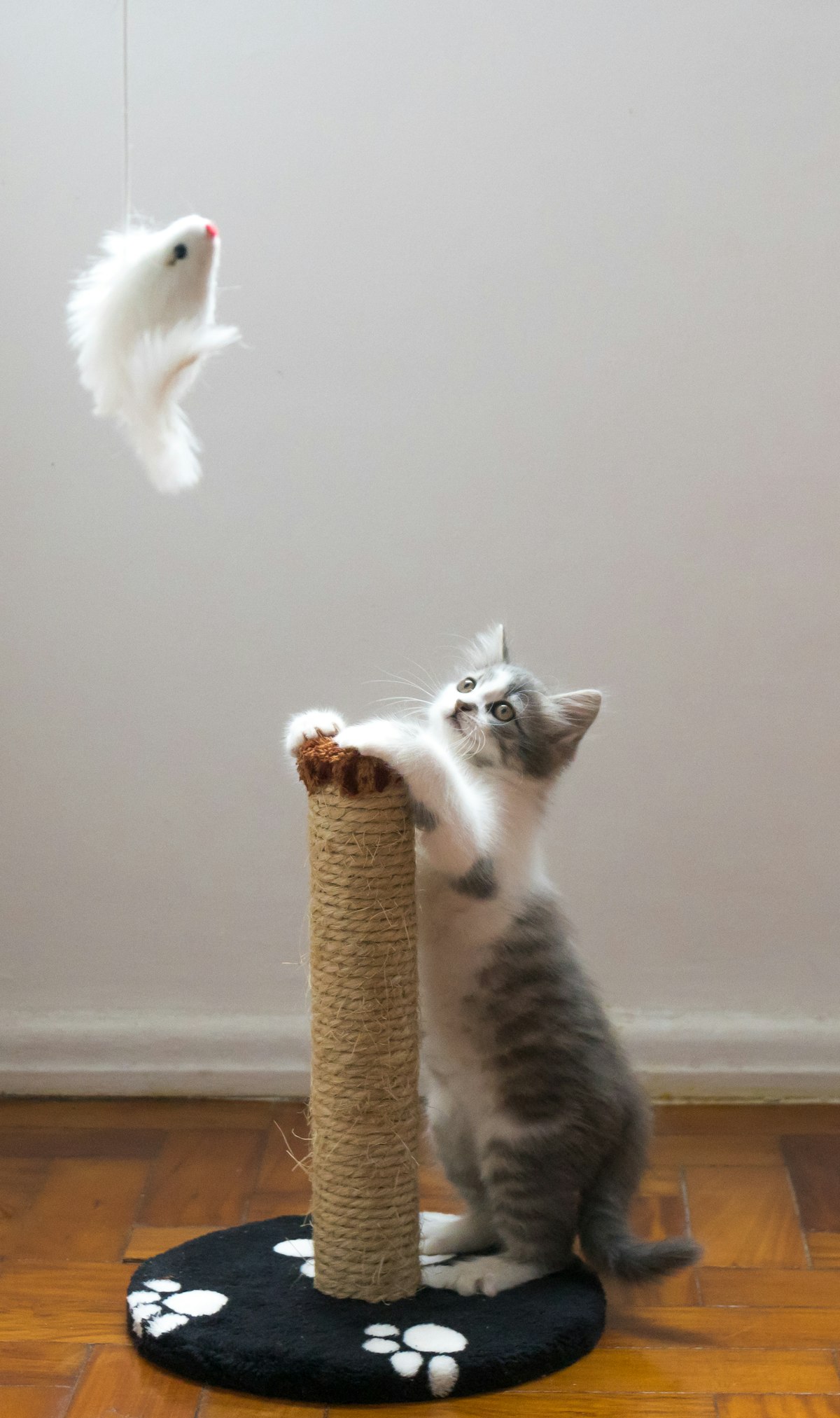
Quick answer: Sisal — a rope-like plant fiber — generally holds up longer under repeated digging and is the more common choice for tall, vertical scratching posts, since its texture and grip mimic tree bark. Cardboard is less expensive and wears out faster, but it's a strong pick for cats who prefer scratching low, flat, or at an angle. Neither material is objectively "better" — the right one depends on how your specific cat already likes to scratch, which is easy to observe before you buy either.
Key takeaways
✓Cats scratch to shed old claw sheaths, mark territory with scent glands in their paws, and stretch their shoulders and back — it's normal maintenance behavior, not misbehavior.
✓Sisal fiber is more durable under heavy, repeated scratching and is the standard material for vertical posts a cat can stretch up on.
✓Cardboard costs less and is easy to replace, and tends to suit cats who scratch low, flat, or on an angled surface rather than straight up.
✓Where you put the scratcher matters as much as what it's made of — placing it where your cat and family already spend time works better than tucking it in a back room.
✓A cat with an established furniture habit can often be redirected by putting a scratcher right next to that exact spot, backed up with a furniture-safe deterrent.
If you've ever caught your cat gleefully shredding the corner of the couch instead of the scratcher sitting three feet away, you've probably wondered whether you just bought the wrong one. Most of the time, the issue isn't that your cat doesn't want to scratch something appropriate — it's that the material or the placement doesn't match what they actually prefer. Sisal and cardboard are the two materials you'll see most, and they're genuinely different tools for different scratching styles, not just a budget-versus-premium choice.
Why Cats Scratch (and Why It's Not Bad Behavior)
Scratching looks destructive, but it's normal feline maintenance with a few real purposes behind it. Cats' claws grow in layers, and scratching helps shed the outer sheath as new claw grows in underneath — similar to how a snake sheds skin. According to the San Diego Humane Society, cats also have scent glands in their paws, and scratching leaves that scent behind as a marker — usually in spots where the cat already feels comfortable and secure, which is exactly why a favorite couch cushion is such a common target. On top of that, the motion itself stretches the shoulders and back, which is part of why cats often scratch right after waking up.
None of this means the couch is a lost cause. It means the fix isn't "stop the scratching" — it's giving your cat a surface they'll choose over the couch, in a spot they'll actually use. That's where material and placement come in.
Sisal vs. Cardboard: Head-to-Head
Both materials satisfy the same underlying instinct, but they behave differently under a cat's claws — and that difference shows up fast in how long each one lasts and which scratching style it supports.
| What matters |
Sisal |
Cardboard |
| Texture |
Woven, rope-like plant fiber — coarse, grippy, closer to tree bark |
Corrugated ridges — softer, satisfying to dig claws into vertically or horizontally |
| Durability |
Holds up well under heavy, repeated scratching over months |
Wears down faster, especially with a determined scratcher — expect more frequent replacement |
| Cost |
Usually a higher upfront cost for the material and construction |
Generally the more budget-friendly option per unit |
| Best orientation |
Common on tall, vertical posts a cat can stretch up on |
Common on flat or angled pads for cats who scratch low |
| Mess |
Minimal shedding once installed |
Sheds small cardboard bits as it wears — normal, but worth knowing upfront |
Neither column is the "correct" answer — the table is really describing two different jobs. Sisal is built for a cat that wants to stretch tall and dig in repeatedly over a long period; cardboard is built for a cat that scratches low and doesn't mind (or even prefers) replacing the surface every so often.
Which One Fits Your Cat
The fastest way to pick is to watch what your cat is already doing — most cats show a clear preference before you ever buy anything.
🐾
The full-stretch climber
Scratches up the side of furniture, a doorframe, or stands on hind legs to reach as high as possible. This cat wants a tall, sturdy, sisal-wrapped post — cardboard won't hold up to that kind of pulling motion for long.
🐾
The low, flat scratcher
Digs at a rug, a doormat, or the flat cushion of the couch rather than climbing anything. A flat or lightly angled cardboard or sisal scratch pad, placed right at floor level, tends to be the better match.
🐾
The undecided cat
No obvious preference yet, especially in a younger cat. It's reasonable to start with whichever material fits your space and budget, watch for a few weeks, and adjust — this isn't a one-time decision you have to get perfect immediately.
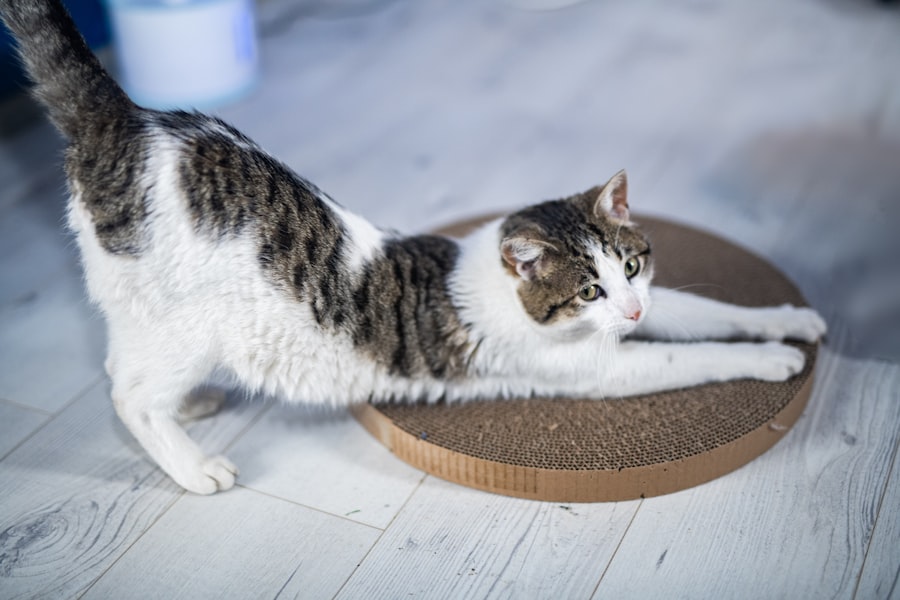 A cat that scratches low and flat, rather than climbing, is usually a better match for a pad than a tall post.
What We Carry
Whisker House currently carries a sisal option built for exactly the low-and-flat scratching style described above, plus a furniture-protection product that works regardless of which material your cat prefers. We don't currently stock a dedicated cardboard scratcher — worth knowing upfront if that's the material your cat prefers based on the section above.

Sisal · low & flat scratchers
Oval Cat Scratcher Bed
$11.99 · 7 in stock
A durable sisal-and-MDF scratch pad with a concave oval shape that doubles as a resting bed — a good fit for a cat that scratches low rather than climbing, and one that gets daily use as a nap spot too. 16.1 × 12.2 in.
Shop Oval Cat Scratcher Bed — $11.99 →

Furniture backup layer
Self-Adhesive Cat Scratch Guard Mat
From $4.99 · 104 in stock
A trimmable, self-adhesive textured mat that sticks to wood, fabric, or leather with no tools — a practical way to protect a specific couch corner or chair leg while your cat's new scratcher earns its trust. Works alongside sisal or cardboard.
Shop Scratch Guard Mat — From $4.99 →
If your cat turns out to be a full-stretch climber rather than a low scratcher, it's also worth pairing a scratcher with real vertical play — our 3-Tier Wooden Cat Tower Track Toy isn't a scratching surface itself, but its solid-wood build gives an energetic climber somewhere else to direct that instinct to stalk and pounce, from $24.99.
Getting Your Cat to Actually Use It
Buying the right material only works if the scratcher ends up somewhere your cat will actually use it. A few practices make a real difference here, drawn from veterinary behavior guidance rather than guesswork.
1
Put it where your cat already scratches
Per
UC Davis School of Veterinary Medicine, the new scratcher should go right at the spot your cat is already targeting — not in a quiet back room where it'll be ignored. The San Diego Humane Society adds that placing it near where people in the household actually spend time helps too, since cats scent-mark places they feel comfortable in.
2
Make the old spot less appealing
A furniture-safe deterrent like double-sided tape, aluminum foil, or a scratch guard mat over the exact spot your cat has been using makes the couch temporarily less satisfying while the new scratcher takes over as the preferred option.
3
Encourage the first few uses
A little catnip on the new surface, plus gently placing your cat's paws on it and offering praise or a treat when they use it, helps build the association faster.
4
Keep nails trimmed
Regular nail trims (roughly every 2-4 weeks, per UC Davis) reduce the damage from any scratching that still happens outside the scratcher while the habit is forming.
💡 One scratcher usually isn't enough
If your home has more than one room where your cat spends real time, a second, lower-cost scratcher (cardboard is a reasonable pick here) in that second location often prevents the furniture problem from just moving to a new room.
Myths vs. Facts
MythScratching means my cat is destructive or misbehaving.
FactScratching is normal claw maintenance and scent-marking behavior, not defiance — the goal is redirecting it, not stopping it.
MythCardboard scratchers are just a cheaper, lesser version of sisal ones.
FactThey're suited to a different scratching style (low and flat) rather than simply a downgrade — plenty of cats genuinely prefer cardboard's texture over sisal.
MythA bigger, more expensive scratcher always works better.
FactPlacement and matching your cat's actual scratching style matter more than size or price — a modest scratcher in the right spot beats an elaborate one in the wrong room.
Frequently Asked Questions
How often does a cardboard scratcher need replacing?
It depends entirely on how much your cat uses it, but expect to replace a cardboard scratcher more often than a sisal one — that's the tradeoff for its lower upfront cost.
Can I offer both sisal and cardboard at the same time?
Yes — many households do exactly this, especially with multiple cats or multiple rooms. There's no downside to offering both if your cat's preference isn't clear yet.
My cat ignores the scratcher I bought. What's wrong?
Usually it's placement or material mismatch, not a defective product — try moving it to the exact spot your cat currently scratches, and reconsider whether it matches their vertical-vs-horizontal preference.
Is scratching furniture ever a sign of a bigger problem?
Sudden, escalating, or unusually aggressive scratching can sometimes reflect stress or anxiety rather than normal maintenance — if the behavior changes suddenly, it's worth mentioning to your vet.
Does declawing solve the problem instead?
Declawing is a significant surgical procedure with real risks and recovery considerations, not a simple fix — it's a conversation to have directly with your veterinarian, not a first-line solution to furniture scratching.
Final Recommendations
If you're deciding between sisal and cardboard today, here's what actually moves the needle:
1
Watch your cat's current scratching habit before buying anything. Vertical climbers want sisal; low, flat scratchers often prefer cardboard or a low sisal pad.
2
Place the new scratcher at the exact spot your cat already targets, not somewhere quieter or more out of the way.
3
Protect the old spot temporarily with a scratch guard mat or a similar deterrent while the new scratcher takes over.
4
Encourage early use with catnip, praise, and treats rather than expecting your cat to find it on their own.
5
Add a second, lower-cost scratcher in any other room your cat spends real time in.
Give Your Cat Somewhere Better to Scratch
The sisal scratcher bed and scratch guard mat above are both in stock now at Whisker House, along with the rest of our cat collection. New visitors get 7% off automatically at checkout.
Shop Whisker House Cats →
WH
Whisker House
Whisker House is a curated pet supply store built by pet owners who read the ingredient panel before recommending anything. Every product is chosen because it solves a real problem for real pets — not because it looks good on a shelf. Backed by 780+ verified customer reviews, shipping across the United States at whiskerhouse.store.
