Dog Grooming · July 2026
Why Is My Dog Shedding So Much?
The real causes behind excessive dog shedding — and the 4-step grooming routine that actually reduces it from $20.
Updated: July 27, 2026 Dog Grooming 7 min read
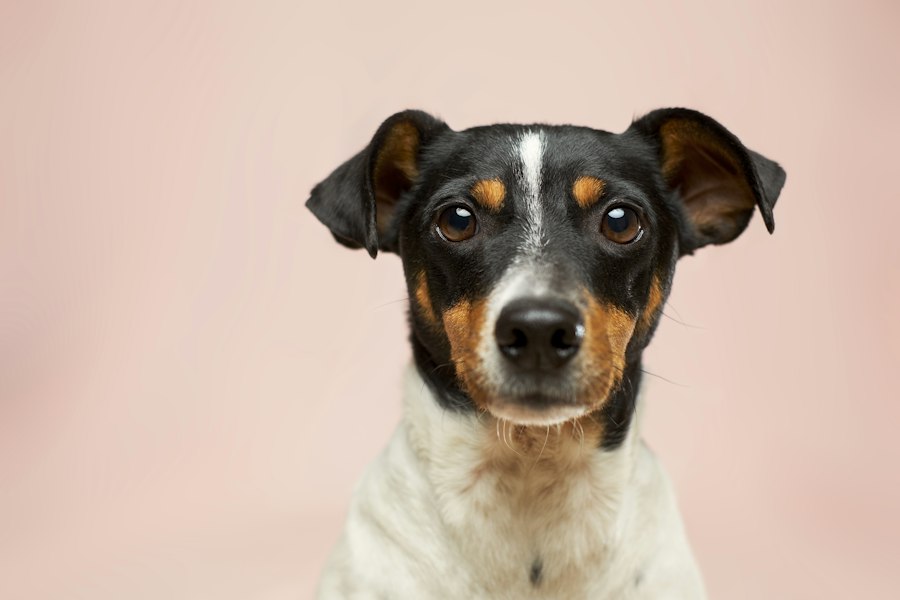
Quick answer: Most dog shedding is normal — but excessive shedding almost always has a specific, addressable cause. The most common are: seasonal coat blowing in double-coated breeds, incorrect shampoo that strips natural oils and disrupts the coat cycle, insufficient brushing that allows undercoat to mat rather than shed cleanly, and nutritional gaps that weaken the hair follicle. The right deshedding shampoo, a silicone bath brush, and a consistent between-bath conditioning routine reduces shedding measurably within 2 to 4 weeks.
Key takeaways
✓All dogs shed — but the amount varies enormously by breed, coat type, season, and grooming routine.
✓Double-coated breeds "blow" their coat twice a year — a natural seasonal process that produces dramatically increased shedding for 3 to 6 weeks.
✓Using the wrong shampoo is one of the most common owner-caused shedding accelerators — pH-incorrect or stripping formulas disrupt the hair growth cycle.
✓A deshedding shampoo used at bath time loosens and releases dead undercoat during the wash — dramatically reducing shedding in the days following the bath.
✓Brushing frequency is the single most effective shedding management tool — loose fur removed during brushing is loose fur that never reaches your furniture.
✓The PRIDE+GROOM professional shedding range is in stock at Whisker House from $20.
You bought a lint roller. Then another. Then you started buying them in packs of ten. Your black clothes live in a separate wardrobe. You vacuum more than you shower. And yet your dog's fur is still everywhere — on the sofa, in your coffee, somehow in rooms the dog does not even go into.
If this sounds familiar, you are not alone. Shedding is the number one grooming complaint from dog owners globally — and in July, when summer coat transitions hit their stride, it reaches a peak. The good news is that most excessive shedding has specific, addressable causes that a well-chosen grooming routine can meaningfully reduce. Here is what is actually happening and exactly what to do about it.
What is normal shedding vs. excessive shedding?
All dogs shed. It is an unavoidable biological process — hair follicles have a growth cycle, old hairs reach the end of their cycle and detach, and new ones grow in their place. The question is never whether a dog sheds, but how much and whether the current level is within the normal range for that dog's breed, age, and season.
Normal shedding looks like: some loose fur during brushing, occasional hairs on furniture and clothing, and a predictable seasonal increase in spring and autumn. Excessive shedding looks like: large clumps coming out during brushing, visible thinning of the coat in patches, a consistently dramatic increase without a clear seasonal trigger, or fur loss accompanied by redness, itching, or skin changes.
💡 When to see a vet about shedding
Most shedding is a grooming problem, not a medical one. However, shedding accompanied by bald patches, skin redness or scaling, excessive scratching, changes in coat texture, or sudden dramatic onset warrants a veterinary check. Thyroid disease, adrenal disorders, allergies, parasites, and fungal infections can all present as increased shedding. Rule out medical causes before investing heavily in grooming products if the shedding pattern is unusual or sudden.
The real causes of excessive shedding
Understanding which cause applies to your dog is the starting point for choosing the right solution. These are the most common — and most fixable — drivers of excessive shedding:
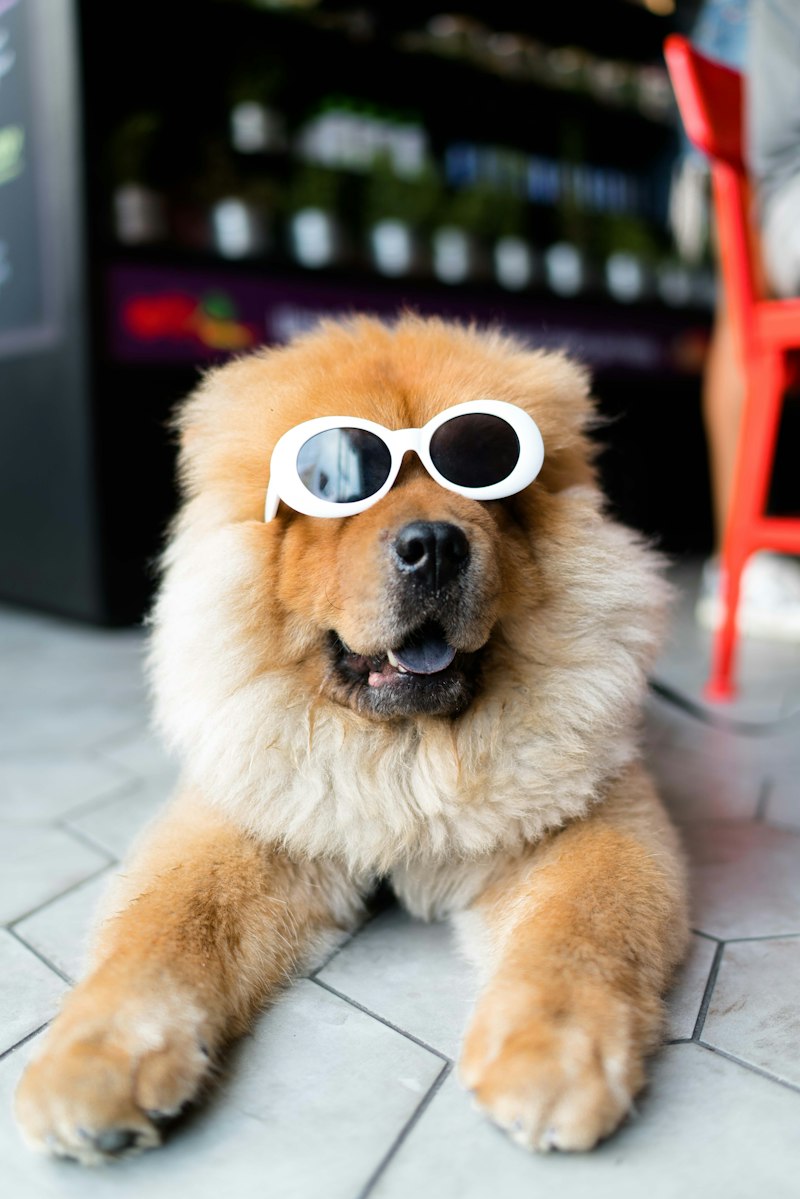 Long-coated and double-coated breeds shed significantly more than single-coated breeds — the coat type is the biggest single predictor of how much fur ends up on your furniture.
Seasonal coat blowing
Double-coated breeds shed their undercoat heavily twice a year — in spring to lose the heavy winter coat, and in autumn to lose the lighter summer coat before growing a new winter undercoat. This process, called "coat blowing," produces dramatically increased shedding for 3 to 6 weeks. July is the tail end of the summer blow — if shedding is peaking right now, this is almost certainly why.
Wrong shampoo disrupting the coat cycle
Shampoos with sulfates, parabens, or the wrong pH for dog skin strip the natural oils from the coat and skin. This disrupts the hair follicle's normal growth cycle — causing more hairs to enter the shedding phase simultaneously. Many owners unknowingly accelerate their dog's shedding with every bath by using an inappropriate shampoo.
Insufficient brushing allowing undercoat buildup
Loose undercoat that is not brushed out does not simply stay in the coat — it mats against the skin, trapping dead hairs and debris, and forces more shed hairs to be expelled at once when they can no longer stay attached. Regular brushing removes loose fur before it reaches your furniture and prevents the undercoat compaction that leads to large clumping shed events.
Nutritional deficiencies — particularly Omega-3 and protein
Hair is made primarily of protein — a dog whose diet is insufficient in high-quality animal protein will have a weaker hair structure that sheds more easily. Omega-3 fatty acid deficiency specifically weakens the hair follicle's hold on the shaft, increasing shedding and producing a dull, dry coat. Both are addressable through diet and supplementation.
Stress-induced shedding
Acute stress — a vet visit, thunderstorm, new environment, or any high-anxiety situation — triggers a release of epinephrine and cortisol that causes the piloerector muscles attached to each hair follicle to contract, releasing hairs in a concentrated burst. This is why dogs seem to shed dramatically more at the vet than at home. Chronic stress produces ongoing elevated shedding through the same hormonal pathway.
Dehydration affecting coat health
In July heat, dogs that do not drink sufficient water develop dry skin that produces more fragile hair shafts. Dehydrated skin loses its elasticity and its ability to hold hair follicles firmly — increasing passive shedding even without active coat blowing. Ensuring adequate daily water intake is the most basic coat health intervention available.
Double coats — why some breeds shed dramatically more
The single biggest predictor of how much a dog sheds is whether they have a single coat or a double coat. Understanding this distinction fundamentally changes how you approach grooming for shedding.
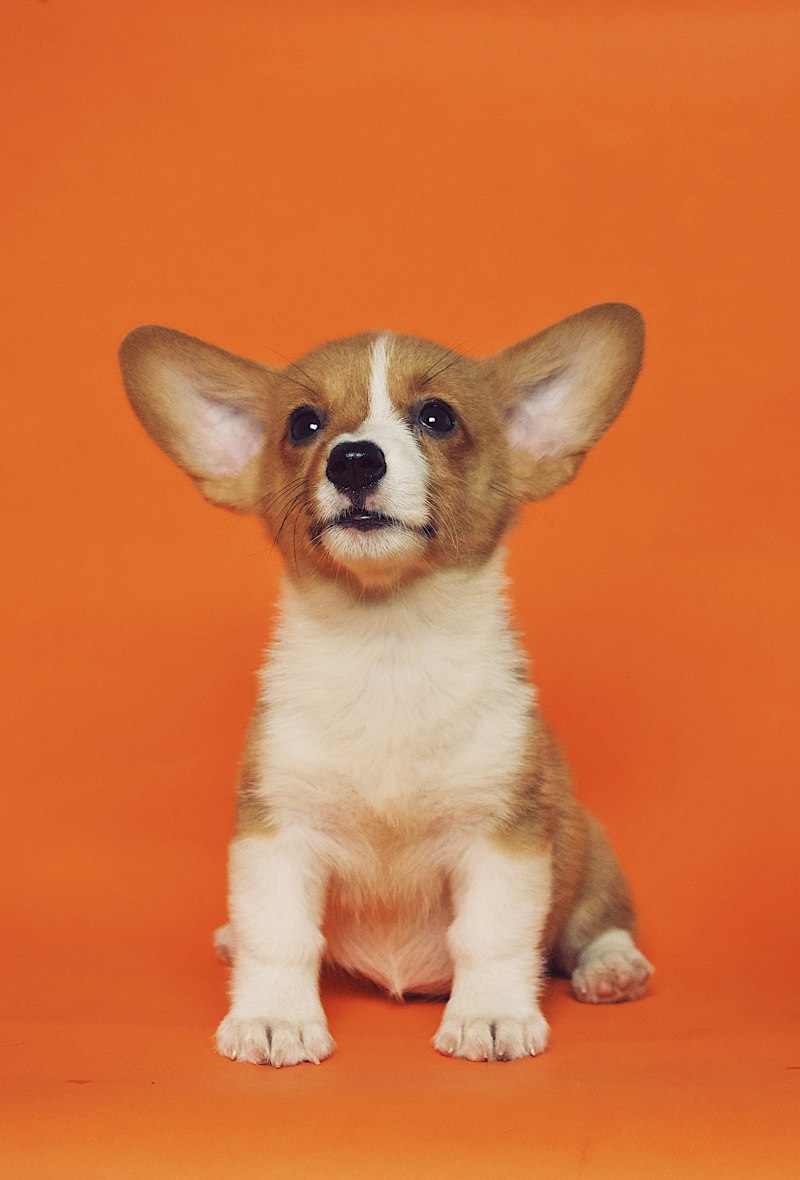 Short single-coated breeds shed steadily year-round but produce less dramatic seasonal explosions than double-coated breeds whose undercoat blows twice a year.
Single-coated breeds
Single-coated dogs have one layer of hair — the outer guard coat — with no dense undercoat beneath. They shed steadily and moderately year-round without dramatic seasonal spikes. Examples include Poodles, Maltese, Yorkshire Terriers, Greyhounds, and Vizslas. Single-coated dogs benefit from regular brushing and a good conditioning shampoo but do not typically experience the seasonal coat-blowing that double-coated breeds undergo.
Double-coated breeds
Double-coated dogs have a dense, soft undercoat beneath a longer, coarser outer guard coat. The undercoat provides insulation — warmth in winter, surprisingly, a cooling layer in summer — and is shed and replaced seasonally. When the undercoat releases, it does so in large quantities over a relatively short period. This is the coat blow.
| Breed |
Coat type |
Shedding level |
Primary approach |
| Labrador Retriever |
Double coat |
Heavy seasonal |
Deshedding shampoo + weekly brushing |
| Golden Retriever |
Double coat |
Heavy year-round + seasonal spike |
Deshedding shampoo + leave-in conditioner + daily brushing |
| German Shepherd |
Double coat |
Very heavy seasonal |
Deshedding shampoo + undercoat rake + frequent bathing during blow |
| Husky / Malamute |
Very dense double coat |
Extremely heavy seasonal |
Deshedding shampoo + bath brush + daily brushing during blow |
| Border Collie |
Double coat |
Moderate to heavy seasonal |
Deshedding shampoo + slicker brush + conditioner |
| Corgi |
Double coat |
Heavy seasonal |
Deshedding shampoo + frequent brushing |
| Poodle |
Single coat (curly) |
Low — traps shed hair |
Regular trimming + leave-in detangler |
| Beagle |
Single short coat |
Moderate steady |
Regular brushing + conditioning shampoo |
⚠ Never shave a double-coated breed to reduce shedding
Shaving a double-coated dog removes the insulating undercoat that regulates their temperature in both hot and cold conditions. It does not permanently reduce shedding — the coat grows back, often with a disrupted texture. It removes UV protection from the skin. And in many dogs, the guard coat and undercoat grow back at different rates, producing a permanently changed, often rougher coat texture. Manage double-coat shedding through grooming — never shaving.
Why your shampoo may be making shedding worse
This is the most overlooked owner-caused shedding driver. The shampoo used at bath time has a direct impact on how much the dog sheds in the days and weeks following the bath.
Dog skin has a pH of approximately 6.2 to 7.4 — significantly more alkaline than human skin (pH 4.5 to 5.5). Human shampoos, even "gentle" or "natural" formulations, are designed for human pH. Applied to dog skin, they disrupt the acid mantle — the thin protective film on the skin surface that maintains pH balance and holds moisture in the skin and hair follicles. A disrupted acid mantle produces dry, flaky skin and weakened hair follicle attachment — which means more shedding, not less, in the weeks following the bath.
Standard stripping shampoos — including many low-cost pet shampoos that are technically formulated for dogs — use sulfate detergents that remove surface oils so effectively that the skin's sebaceous glands respond by over-producing oil, creating a cycle of oily-then-stripped coat that is never in equilibrium. This cycle also weakens the follicle-hair interface and increases shedding.
A deshedding shampoo specifically formulated for double-coated breeds addresses this differently. Rather than just cleaning the coat, it contains conditioning agents that penetrate the undercoat during the bath, loosening the dead undercoat hairs so they release during rinsing — removing the shed fur during the bath rather than allowing it to continue releasing over the following weeks.
💡 How a deshedding shampoo works
The active mechanism in a deshedding shampoo is penetration of the undercoat combined with conditioning agents that reduce the surface tension holding dead hairs in the follicle. When you rinse thoroughly after a deshedding shampoo, a significant portion of the loose undercoat comes out with the rinse water. This is why a dog that has been bathed with a deshedding shampoo often sheds dramatically less in the 1 to 2 weeks following the bath compared to the same dog bathed with a standard shampoo.
The 4-step grooming routine that reduces shedding
This routine addresses every controllable shedding driver simultaneously. It takes approximately 30 to 45 minutes for the bath itself and under 10 minutes per brushing session. The results are measurable within 2 to 4 weeks of consistent application.
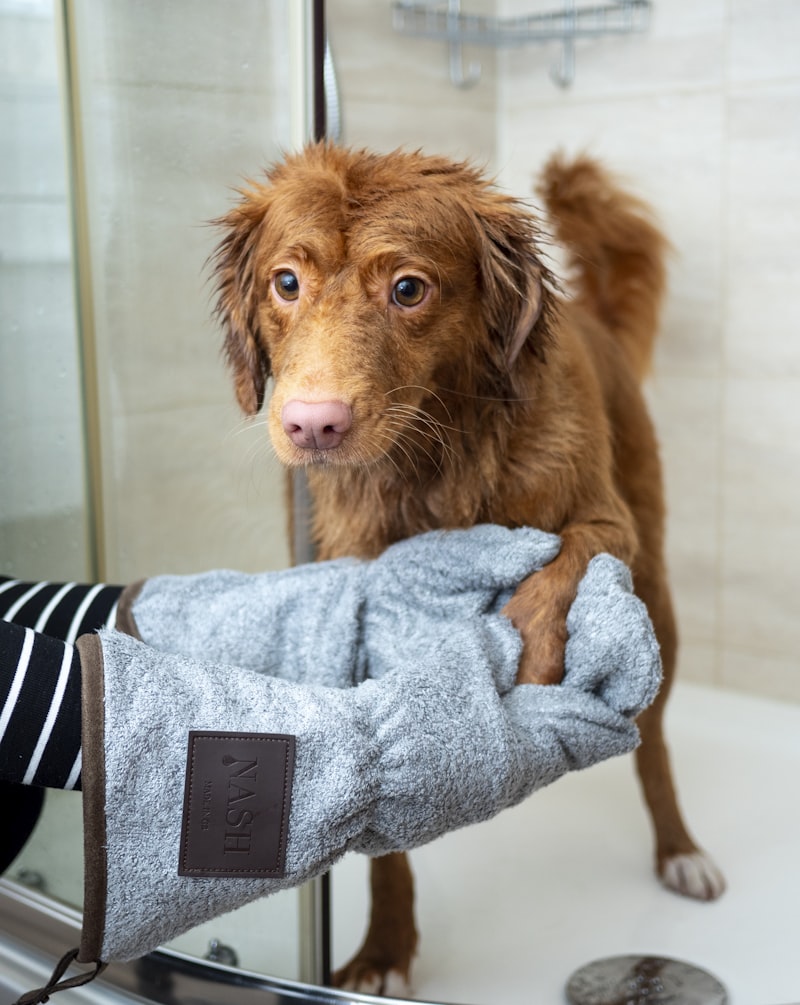 The bath is where the most shedding management work happens — the right shampoo, a silicone bath brush, and thorough rinsing releases the bulk of the loose undercoat during the wash itself.
1
Pre-bath brush — remove loose surface fur first
Before getting your dog wet, brush thoroughly to remove loose fur from the outer coat. Wet fur mats and tangles — any existing tangles will tighten significantly when wet and become much harder to remove. A 5-minute pre-bath brush session removes loose surface fur and prevents post-bath tangling. Do not skip this step.
2
Bathe with a deshedding shampoo and a silicone bath brush
Apply a deshedding shampoo specifically formulated for your dog's coat type. Work it through the coat using a silicone bath brush — the flexible bristles reach through the outer guard coat to the undercoat, creating lather at the skin level and mechanically loosening dead undercoat hairs during the bath. Let the shampoo sit for 3 to 5 minutes before rinsing. You will see loose fur coming off during the rinse — this is the deshedding shampoo working correctly.
3
Apply a rinse-out conditioner
After rinsing the shampoo completely, apply a rinse-out conditioner and work it through the coat. Conditioner restores moisture to the outer coat and skin after shampooing, reduces the static that causes loose hairs to travel further when shed, and makes the coat smoother — which means shed hairs slide out more easily during brushing rather than tangling and matting. Leave in for 2 to 3 minutes then rinse thoroughly.
4
Between-bath maintenance — leave-in conditioner before brushing
Between baths, apply a leave-in conditioner spray before each brushing session. The leave-in reduces friction during brushing — which means more loose fur is captured by the brush rather than flying around the room — and keeps the coat moisturized, which strengthens the hair shaft and reduces passive shedding between grooming sessions. This step transforms a frustrating brushing session into a genuinely effective one.
💡 Brushing frequency by coat type
Short double coats (Labradors, Beagles): 2 to 3 times per week. Medium double coats (Golden Retrievers, Border Collies): 3 to 4 times per week. Long or very dense double coats (Huskies, German Shepherds): daily during coat blow season, 4 to 5 times per week otherwise. During peak shedding in July, increase brushing frequency by one session per week for any double-coated breed.
Shedding management products at Whisker House
The complete PRIDE+GROOM shedding routine — four professional-grade products, each addressing a specific step in the 4-step routine above. All verified in stock:

Step 2 — deshedding shampoo
PRIDE+GROOM THE SHEDDER Dog Shampoo
$20 (16oz) · $120 (1 Gallon) · 363 in stock
The question most buyers ask: "Does a deshedding shampoo actually reduce shedding or is it just a regular shampoo with different marketing?" THE SHEDDER is the most used shampoo by professional groomers working with heavy-shedding breeds — its formula is specifically designed to penetrate the undercoat during the bath and release dead hairs during rinsing. Dog owners who switch to it consistently report dramatically less shedding in the 1 to 2 weeks following each bath. Moisturising, hypoallergenic, sulfate-free. Ideal for Labradors, Goldens, Huskies, German Shepherds, and all double-coated breeds.
"The amount of fur that came out during the first rinse was honestly shocking. The week after the bath I barely needed the lint roller." — verified buyer
Shop THE SHEDDER — from $20 →

Step 2 — silicone bath brush
PRIDE+GROOM THE BATH BRUSH
$22 · 89 in stock
The question most buyers ask: "Is this actually different from a regular bath brush?" Yes — the flexible silicone bristles are specifically designed to reach through the outer guard coat to the undercoat without scratching the skin. Used during the shampoo application, it creates lather at skin level and physically dislodges loose undercoat hairs that a hand-wash alone cannot reach. Also works dry between baths for quick coat refresh without water. The combination of THE SHEDDER shampoo with this brush produces significantly better results than either used alone.
"I used to dread bath day because of all the fur. With this brush and THE SHEDDER it comes out during the bath instead of all over the house for two weeks after." — verified buyer
Shop THE BATH BRUSH — $22 →

Step 3 — rinse-out conditioner
PRIDE+GROOM THE FINAL COAT Dog Conditioner
$20 (12oz) · $32 (16oz) · 524 in stock
The question most buyers ask: "Do I really need to condition after a deshedding shampoo?" Yes — the deshedding process removes more oils than a standard wash because it is actively releasing trapped undercoat. Without a conditioner, the coat and skin can become dry after a deshedding bath, which ironically increases shedding in the following days. THE FINAL COAT restores moisture, smooths the cuticle, reduces static (which spreads loose hairs further), and makes post-bath brushing significantly easier. Applied for 2 to 3 minutes then rinsed out.
"The difference in how easy brushing is after using this conditioner is night and day. The comb glides through instead of pulling." — verified buyer
Shop THE FINAL COAT — from $20 →

Step 4 — between-bath leave-in
PRIDE+GROOM THE LEAVE IN Conditioner Spray
$25 · 3,168 in stock
The question most buyers ask: "What does a leave-in actually do between baths?" THE LEAVE IN is sprayed onto the coat before each brushing session. It reduces friction between the brush and the coat, which means the brush captures more loose fur per stroke rather than pushing it around. It also keeps the coat conditioned between baths, reducing the dryness that causes passive shedding. For heavy-shedding breeds, applying this before every brushing session reduces the amount of loose fur that escapes into the environment by a measurable amount — and makes brushing significantly more comfortable for the dog.
"I spray this on before every brush. My Golden's coat is softer, the brushing is easier, and there is honestly less fur on the sofa between washes." — verified buyer
Shop THE LEAVE IN — $25 →
💡 Best value — THE BATH BOX SET
The PRIDE+GROOM Bath Box Set ($62) bundles THE SHEDDER shampoo with THE FINAL COAT conditioner in one purchase — saving $10 versus buying separately and giving you the complete 2-step bath routine in one box. 1,804 units in stock across all three coat-type variants.
Shop THE BATH BOX SET — $62 →
Myths vs. facts about dog shedding
MythShaving my dog will reduce shedding.
FactShaving a double-coated dog removes the undercoat temporarily — but the undercoat grows back. In many cases, it grows back with a disrupted texture where the undercoat and guard coat no longer grow at the same rate, permanently changing the coat. Shaving also removes UV protection and disrupts thermoregulation. It does not solve the shedding problem — it creates new ones while the coat recovers.
MythBrushing more spreads the fur around rather than reducing it.
FactBrushing with a leave-in conditioner applied first captures loose fur in the brush rather than spreading it. Any loose fur removed during brushing is loose fur that never reaches your sofa, your clothes, or your coffee. The key is using the right technique — brushing with a conditioner applied, working in sections, and using a brush appropriate to the coat type. Dry brushing without conditioning causes static that does spread fur — which is why the leave-in step matters.
MythBathing more often reduces shedding.
FactBathing more than every 3 to 4 weeks with the wrong shampoo strips the coat of natural oils, dries the skin, and actually increases shedding. Bathing with the right deshedding shampoo at an appropriate frequency (every 4 to 6 weeks for most double-coated breeds) is more effective than bathing frequently with the wrong product. More baths is not better — the right bath is better.
MythMy dog sheds so much because they are unhealthy.
FactHeavy shedding in double-coated breeds is normal biology, not a health problem. A Husky in peak coat blow is perfectly healthy — they are simply doing what double-coated dogs do twice a year. Health-related shedding is characterized by bald patches, skin changes, itching, or sudden onset not aligned with seasonal patterns. Normal heavy shedding — even dramatic amounts — does not indicate illness in breeds for which it is expected.
MythOne deshedding tool is all you need.
FactNo single product eliminates shedding — the most effective approach combines a deshedding shampoo (releases undercoat at bath time), a bath brush (reaches the undercoat during washing), a rinse-out conditioner (restores the coat after deshedding), and a leave-in conditioner (maintains coat condition between baths and captures loose fur during brushing). Each step addresses a different point in the shedding cycle. Together they produce results that no single product achieves alone.
Frequently asked questions
Why is my dog shedding more than usual right now in July?
July is the tail end of the summer coat transition for most double-coated breeds. Dogs shed their lighter summer undercoat in mid-to-late summer before growing a denser winter undercoat. This seasonal process — called coat blowing — produces dramatically increased shedding for 3 to 6 weeks. It is entirely normal and peaks roughly in June and July. The most effective management during this period is more frequent brushing (daily for heavy shedders), a deshedding bath at the start of the blow season, and a leave-in conditioner before every brushing session.
Which PRIDE+GROOM shampoo is right for my shedding dog?
For heavy-shedding double-coated breeds — Labradors, Golden Retrievers, Huskies, German Shepherds, Corgis, Border Collies — THE SHEDDER is the correct choice. It is specifically formulated to penetrate and release the undercoat during the bath. For dogs with sensitive skin who also shed significantly, THE SENSITIVE ONE is the better starting point — it is gentler on reactive skin while still conditioning the undercoat. For Doodles and curly-coat breeds who shed but trap the fur in their curls, THE NON SHEDDER addresses the specific coat structure of those breeds.
How long before I see a reduction in shedding after starting this routine?
Most owners notice a measurable difference after the first deshedding bath — the shed fur comes out in the bath rather than over the following two weeks. The longer-term reduction in ambient shedding (fur on furniture, clothes, and floors between baths) typically becomes apparent within 2 to 4 weeks of consistent use of the full 4-step routine. The between-bath brushing with leave-in conditioner is often where owners notice the biggest day-to-day improvement — less fur in the air during brushing and less on the sofa in the days following.
Does diet affect how much my dog sheds?
Yes — significantly. Hair is made primarily of protein and keratin. Dogs on low-quality food with insufficient animal protein, or with poor protein digestibility, have weaker hair structure that sheds more easily. Omega-3 fatty acid deficiency specifically weakens the follicle-hair interface and is one of the most common nutritional causes of excessive shedding. Adding a daily Omega-3 supplement such as fish oil to your dog's food produces visible coat improvement — less shedding, more shine — within 3 to 4 weeks in most dogs.
How often should I bathe my heavy-shedding dog?
For most double-coated breeds, every 4 to 6 weeks is the optimal bathing frequency when using a deshedding shampoo and conditioner. During peak coat blow season (July and again in October to November), some owners bathe every 3 to 4 weeks to accelerate the undercoat release. Bathing more frequently than every 3 weeks risks stripping the coat's natural oils. Brushing frequency should always increase during peak shedding — not bathing frequency.
Can I use THE SHEDDER shampoo on a puppy?
THE SHEDDER is formulated for adult double-coated dogs. For puppies under 12 weeks or those with known skin sensitivity, THE SENSITIVE ONE is the safer starting point — it is hypoallergenic and specifically noted as safe for puppies. Most puppies do not develop their full adult double coat until 6 to 12 months of age, so the full deshedding routine becomes most relevant as the adult undercoat establishes. Introducing gentle brushing and bath habits early with THE SENSITIVE ONE builds the tolerance for grooming that makes the full adult routine much easier.
Final recommendations
You will not eliminate shedding — but you can control where it ends up. The difference between a dog whose fur is everywhere and the same dog on the right grooming routine is not the amount of fur shed — it is when and where the shedding happens. Here is how to shift it from your sofa to the bath drain and your brush:
1
Start with THE SHEDDER shampoo at your next bath. This is the highest-impact single change you can make. Most owners see the difference in the first wash — large amounts of loose undercoat come out in the rinse rather than over the following two weeks.
2
Use THE BATH BRUSH during the shampoo application. Without a brush reaching the undercoat, the deshedding shampoo cannot work as effectively. The silicone bristles reach through the guard coat and physically dislodge the dead undercoat the shampoo loosens.
3
Always follow the shampoo with THE FINAL COAT conditioner. The deshedding bath strips more oils than a standard wash. Conditioning after every deshedding bath prevents the dryness that actually increases shedding in the days following.
4
Apply THE LEAVE IN before every brushing session between baths. Spritz onto the coat, wait 30 seconds, then brush. The conditioner captures loose fur in the brush rather than the air, makes brushing faster and more comfortable, and keeps the coat conditioned between washes.
5
Increase brushing frequency during July coat blow. If your dog is in peak shedding right now, add one extra brushing session per week. The fur coming out during brushing is fur that is not reaching your furniture — every session matters during coat blow season.
6
Never shave a double coat. It does not solve the shedding and creates coat and skin problems that can persist for months. Manage the shed fur through grooming — not by removing the coat.
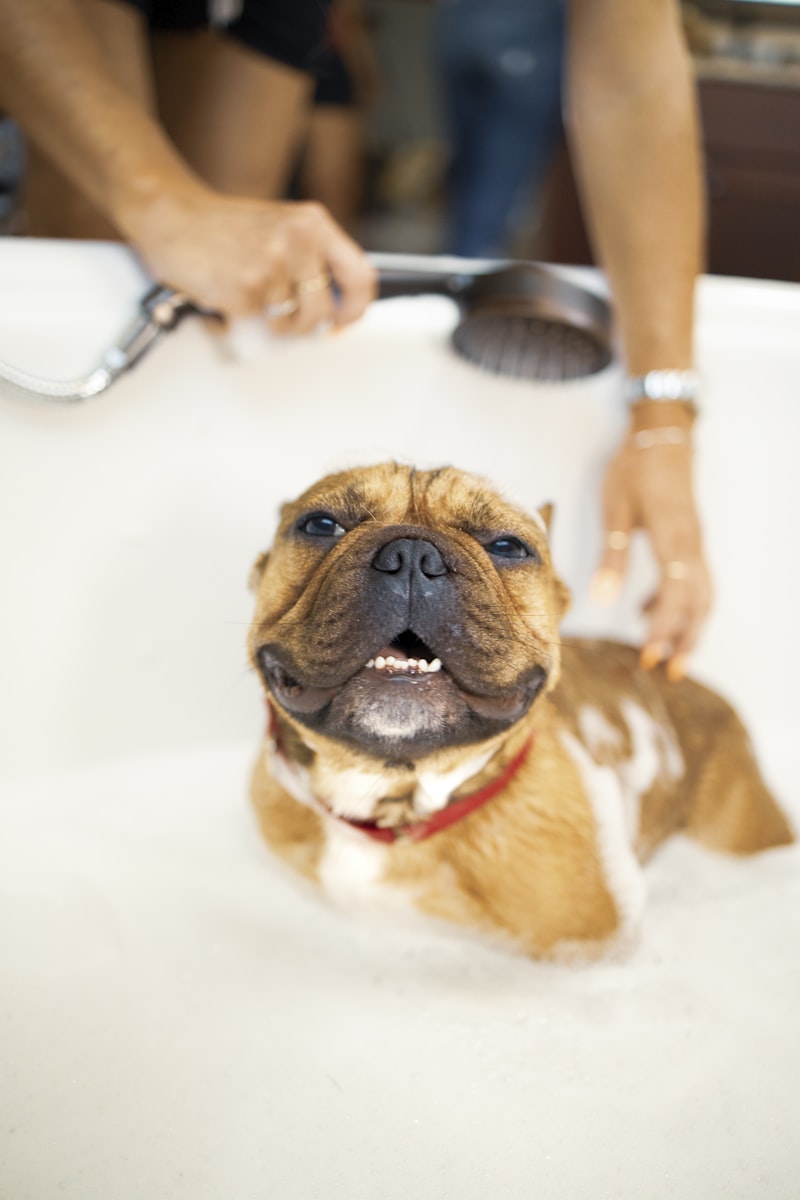 A well-groomed dog is not a dog that does not shed — it is a dog whose shed fur ends up in the brush and the bath drain rather than everywhere in your home.
Less fur on the sofa. More in the drain where it belongs.
The complete PRIDE+GROOM shedding routine — THE SHEDDER shampoo, THE BATH BRUSH, THE FINAL COAT conditioner, and THE LEAVE IN spray — is in stock now at Whisker House. Ships across the United States from $20.
Shop the shedding routine at Whisker House →
WH
Whisker House
Whisker House is a curated pet supply store built by dog owners who have vacuumed enough fur to stuff a mattress. Every product is chosen because it solves a real problem for real pets — not because it looks good on a shelf. Backed by 780+ verified customer reviews, shipping across the United States at whiskerhouse.store.
