Dog Nutrition · August 2026
Freeze-Dried Raw Dog Food 101: Benefits, Risks, and How to Switch Safely
It's one of the fastest-growing categories in the food aisle — but freeze-drying doesn't work the way most people think it does. Here's what's actually in the bag, what the AVMA and FDA say about the risks, and how to introduce it without a week of stomach trouble.
Updated: August 10, 2026
Dog Nutrition
8 min read

Quick answer: Freeze-dried raw dog food is raw meat, organs, and often fruit or vegetables that have been frozen, then had roughly 98% of their moisture pulled out under vacuum — so it keeps raw feeding's nutrient profile in a shelf-stable, no-refrigeration form. It is not a food-safety treatment: freeze-drying preserves bacteria right along with the food, so it carries the same Salmonella and Listeria risk as fresh raw meat. That's why the American Veterinary Medical Association (AVMA) discourages feeding any raw or undercooked animal protein. If you want to try it, introduce it gradually, handle it in your kitchen the way you'd handle raw chicken, and talk to your vet first if anyone in your household is very young, elderly, pregnant, or immunocompromised.
Key takeaways
✓Freeze-drying removes moisture, not bacteria — handle the food like you'd handle raw chicken on your own counter.
✓The AVMA discourages raw and undercooked diets because of Salmonella, Listeria, Campylobacter, and E. coli risk to pets and people.
✓Only a food labeled "complete and balanced" under AAFCO's nutritional adequacy statement can replace a regular meal — a topper can't.
✓A slow, one-week transition (mixing old and new food) is the standard vet-recommended way to avoid an upset stomach.
✓A feeding mat or slow feeder solves most of the real-world mess and gulping problems raw feeders run into.
✓Check with your vet first if anyone in the house is very young, elderly, pregnant, or immunocompromised.
Freeze-dried raw is everywhere right now — scoop-and-serve bags that promise the benefits of a raw diet without the freezer space, the thawing, or the smell. If you've been curious about switching your dog over, or a bag of it is already sitting in your cart, it's worth understanding what freeze-drying actually does — and doesn't do — before you make the change.
What Is Freeze-Dried Raw Dog Food, Exactly?
Freeze-dried raw dog food starts as raw ingredients — usually muscle meat and organ meat, often with fruits or vegetables — that get frozen solid, then placed in a vacuum chamber. Under low pressure, the ice sublimates directly into vapor, pulling moisture out of the food without ever raising its temperature the way cooking or heat-drying does. According to PetMD, that low-heat process means enzymes and much of the ingredients' original nutritional content stay intact — a real point of difference from kibble, which is cooked at high heat during extrusion.
The result is shelf-stable: light, crumbly, and ready to eat straight from the bag, or rehydrated with warm water to rebuild something closer to its original raw texture.
Freeze-Dried vs. Frozen Raw vs. Dehydrated
These three raw-adjacent formats get confused often. Freeze-dried keeps the nutrient profile of raw food in a shelf-stable form. Frozen raw is truly raw and needs freezer space, with the shortest safety window once it's thawed. Dehydrated uses gentler, sustained heat over a longer stretch, which creates a chewier, jerky-like texture — we cover that comparison in detail, treat by treat, in our freeze-dried vs. dehydrated training-treat guide.
The Real Benefits
Freeze-dried raw earns its popularity honestly — these are the benefits that actually hold up:
🎒
No freezer, no thawing
Sealed bags store at room temperature in a pantry — no freezer space or overnight thaw needed, unlike frozen raw.
🥩
Stronger nutrient retention than kibble
Because there's no high-heat cooking step, more of the original protein and enzyme content survives processing, per PetMD's reporting above.
😋
High palatability
The concentrated aroma and taste often win over picky eaters or dogs recovering their appetite after illness.
🗓️
Long, stable shelf life
An unopened bag can sit in a pantry for months, making it realistic for everyday feeding rather than an occasional treat.
The Risks: What the AVMA and FDA Actually Say
This is the part most product pages skip. The AVMA's official policy states plainly that it "discourages feeding any raw or undercooked animal-sourced proteins...to dogs and cats because of their risk to human and animal health," naming Salmonella, Campylobacter, E. coli, and Listeria monocytogenes as the pathogens of concern. Critically, the policy notes that apparently healthy dogs can carry these bacteria without showing symptoms themselves — meaning the bigger risk is often to the people in the house, especially anyone young, elderly, pregnant, or immunocompromised.
The FDA's own testing backs this up with real numbers: of 196 raw pet food samples it tested, 15 came back positive for Salmonella and 32 for Listeria monocytogenes — compared to zero or near-zero positives in dry, semi-moist, and jerky-type foods tested the same way.
⚠ Handle it like raw meat, not like kibble
Per FDA guidance: wash your hands for at least 20 seconds after handling it, disinfect bowls and counters, thaw or rehydrate in the fridge rather than on the counter, keep it away from other food, and avoid letting your dog lick your face right after a meal — especially around kids, seniors, or anyone immunocompromised.
MythFreeze-drying kills the bacteria in raw meat.
FactFreeze-drying is a preservation method, not a food-safety step. Veterinary microbiologist Dr. Scott Weese, writing on the
Worms & Germs Blog, notes that "freezing or freeze-drying is a pretty hospitable process and state for most bacteria" — it does little to reduce Salmonella or Listeria specifically.
MythIf my dog seems fine, the food must be safe.
FactA dog can carry and shed Salmonella in its stool without ever looking sick, per the AVMA policy above — which is exactly why hand-washing and surface disinfection matter, even when your dog seems perfectly healthy on the food.
Complete Meal or Topper? Reading the Label
Not every freeze-dried raw product is meant to be a dog's entire diet. The FDA explains that a food can only be labeled "complete and balanced" if it meets AAFCO's Dog Food Nutrient Profiles or passes an AAFCO feeding trial — look for that phrase, or a reference to AAFCO nutrient profiles, in the small-print nutritional adequacy statement on the bag. Treats, toppers, and "mixers" are typically not built to that same standard and shouldn't replace a full meal on their own.
Two of the freeze-dried raw options in our own catalog are labeled by their makers as flexible enough to serve either way:

Complete meal or topper
Alpha Pak Premium Raw Freeze-Dried Dog Food – Beef Recipe
From $44.50 (16 oz)
Human-grade grass-fed beef, organ meats, fruits, vegetables, flaxseed, and beef bone — grain-free, made in the USA. The brand's own label positions it as either a complete meal or a nutrient-dense kibble topper, so check the bag's nutritional adequacy statement for the wording that matters for your dog.
Shop Alpha Pak Beef — $44.50 →

Complete meal or topper
Montana Dog Food Co Grain-Free Chicken Freeze-Dried Raw Adventure Fuel
From $19.99 (6.4 oz)
Cage-free chicken, organs, whole eggs, sweet potato, and live probiotics, freeze-dried in small batches. The brand notes each bag rehydrates to roughly 4+ lbs of food — scoop and serve dry, or add warm water for a stew-like texture.
Shop Montana Dog Food Co Chicken — $19.99 →
How to Switch Your Dog to Freeze-Dried Raw Safely
The single biggest cause of an upset stomach on a new food isn't the food itself — it's switching too fast. The Clinical Nutrition Service at Tufts' Cummings School of Veterinary Medicine recommends gradually mixing the new food into the old over at least one full week:
1
Days 1–2: about 10–25% new food
Mix a small amount of freeze-dried raw into your dog's current food. Watch for any change in stool or appetite before increasing.
2
Days 3–4: about 50/50
Move to an even split between old and new food, per Tufts' recommended schedule.
3
Days 5–6: about 75% new food
Keep increasing the new food's share as your dog's stool stays normal.
4
Day 7 and beyond: 100% new food
By the end of the week your dog should be fully transitioned — keep watching stool and appetite for a few more days.
5
If you see soft stool, slow down
Tufts notes some soft stool can happen during any diet change — hold the current ratio a couple more days rather than pushing forward on schedule.
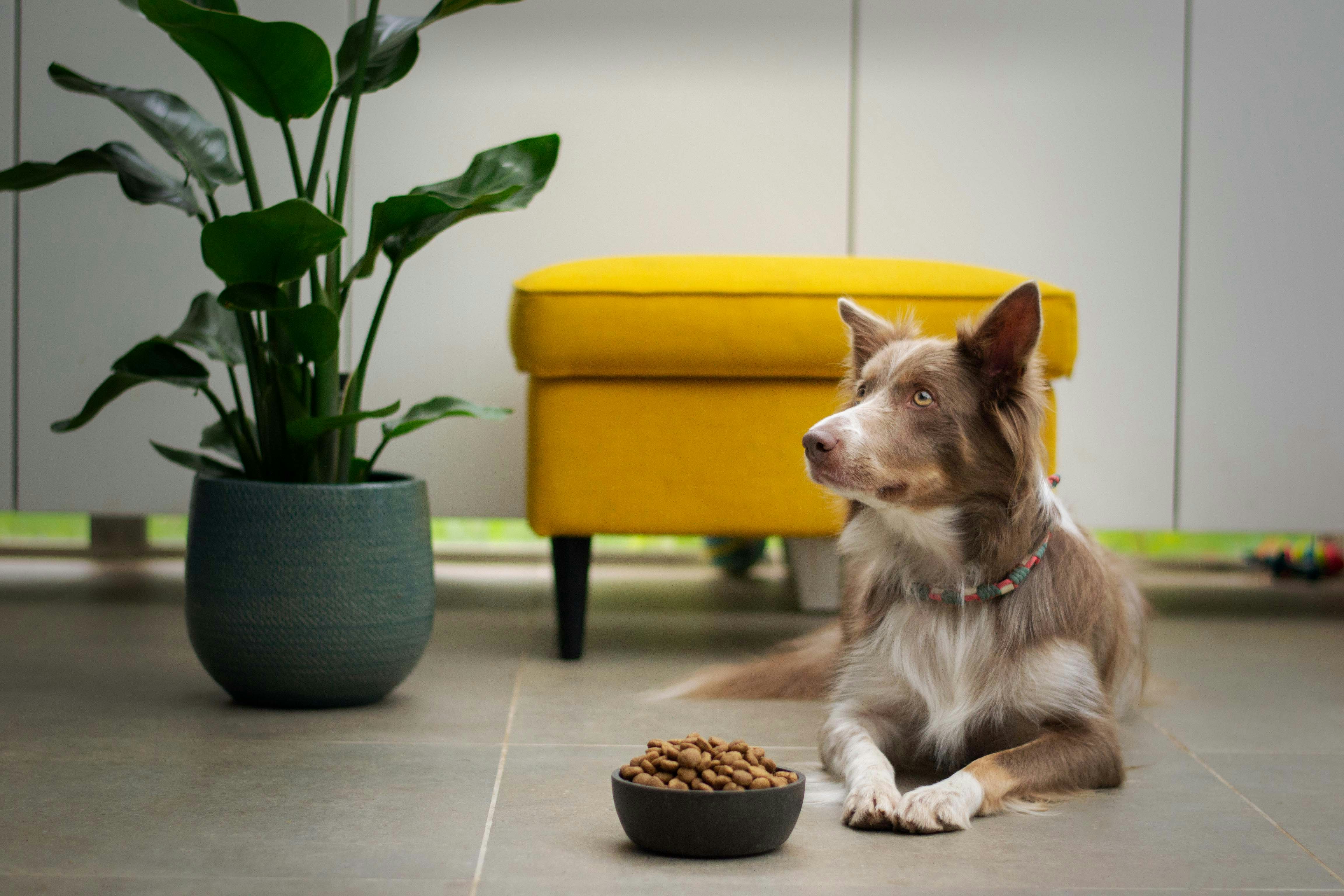 A slow, week-long transition is the easiest way to avoid stomach upset.
Keeping Mealtime Clean
Rehydrated freeze-dried raw behaves a lot like wet food — splashy water, crumbles that stick to the floor, and dogs who gulp rather than chew. Two accessories solve most of the real-world mess:

Mess control
VIKAMA Pet Placemat
From $7.99
A leak-proof, non-slip mat that sits under the bowl and absorbs spilled water or rehydrated food before it reaches your floor — wipes clean in seconds.
Shop VIKAMA Placemat — from $7.99 →

For fast eaters
Din Din 4 Dogs Silicone Slow Feeder
$14.99
A food-grade silicone puzzle bowl with a non-slip base — spread rehydrated food across the maze pattern to slow down a dog who gulps, which also cuts down on spilled mess.
Shop Din Din 4 Dogs Slow Feeder — $14.99 →
Frequently Asked Questions
Is freeze-dried raw dog food actually "raw"?
Nutritionally, yes — freeze-drying removes moisture without cooking the ingredients, so the food keeps raw feeding's basic nutrient profile. It's just shelf-stable instead of needing a freezer.
Does freeze-drying kill Salmonella or Listeria?
No. As the myths-vs-facts section above covers, freeze-drying preserves food, it doesn't sanitize it — veterinary microbiologists treat freeze-dried raw as carrying similar pathogen risk to fresh or frozen raw.
Can puppies eat freeze-dried raw food?
Some complete-and-balanced freeze-dried formulas are labeled for all life stages, including puppies — but puppies, especially large-breed puppies, have specific calcium and phosphorus needs. Check the label's life-stage claim and run any new diet by your vet first.
Is a freeze-dried "topper" nutritionally complete on its own?
Usually not. Per the FDA, treats, toppers, and mixers are typically not formulated to be a pet's sole diet. Keep feeding a complete meal alongside it unless the topper's own label carries an AAFCO complete-and-balanced statement.
Is freeze-dried raw safe if someone in my house is immunocompromised?
Talk to your vet — and, if relevant, your doctor — first. The AVMA specifically flags young, elderly, pregnant, and immunocompromised people as higher-risk from pathogen exposure through pet food handling and pet waste.
Is freeze-dried raw more expensive than kibble?
Generally, yes — the amount of real meat used and the freeze-drying process both add cost compared to extruded kibble. Exact cost-per-meal varies by brand and your dog's size, so it's worth comparing a bag's daily feeding guide against your dog's current food.
If You Only Do Three Things
1
Handle it like raw meat. Wash your hands, disinfect bowls and counters, and keep it away from kids' hands and faces.
2
Check the label before you buy. Look for the AAFCO "complete and balanced" nutritional adequacy statement if you want it to replace a meal, not just top one.
3
Transition over a full week. Rushing the switch is the single most common reason dogs get an upset stomach on a new food.
Ready to Try Freeze-Dried Raw?
Browse Whisker House's freeze-dried and raw-style dog food, picked for real ingredient lists — and get 7% off automatically as a new customer.
Shop Dog Food & Treats →
WH
Whisker House
Whisker House is a small, independent online pet supply store with 780+ verified customer reviews averaging 4.8 stars. We check the label and the source before anything goes on the blog.
